

You keep bleeding radiators and calling around
You're still hunting down a contractor, explaining the cold rooms again on every call, and comparing quotes while the house stays uneven.
Radiators that stay cold or only warm up partway usually mean air trapped in the system, a boiler that isn't firing, or a circulator pump that's stopped moving water through the loop. Steam and hot water systems depend on that water or steam reaching every radiator in the house, and air pockets or a failed pump keep it from getting there, so you end up with some rooms heating and others not, or a radiator that's hot at the bottom and cold at the top. A boiler that won't fire at all is a different problem, usually electrical or gas-related, and it means no radiator in the house is getting heat. Either way, this isn't something that clears up on its own, and the fix depends on which of these is actually happening in your system.




Walk the house and check each radiator by hand. One cold at the top and warm at the bottom usually means trapped air, and bleeding it fixes that one. If several are cold all the way through, the problem is further back, at the boiler or the circulator pump, and no amount of bleeding will help. You might hear gurgling or clanking in the pipes, or notice the boiler running but the heat never reaching the far end of the house. Rooms stay cold no matter how high you set the thermostat, and the boiler keeps firing to try to meet it. Left alone, a pump that's stopped moving water can lead to a boiler that short cycles or overheats.
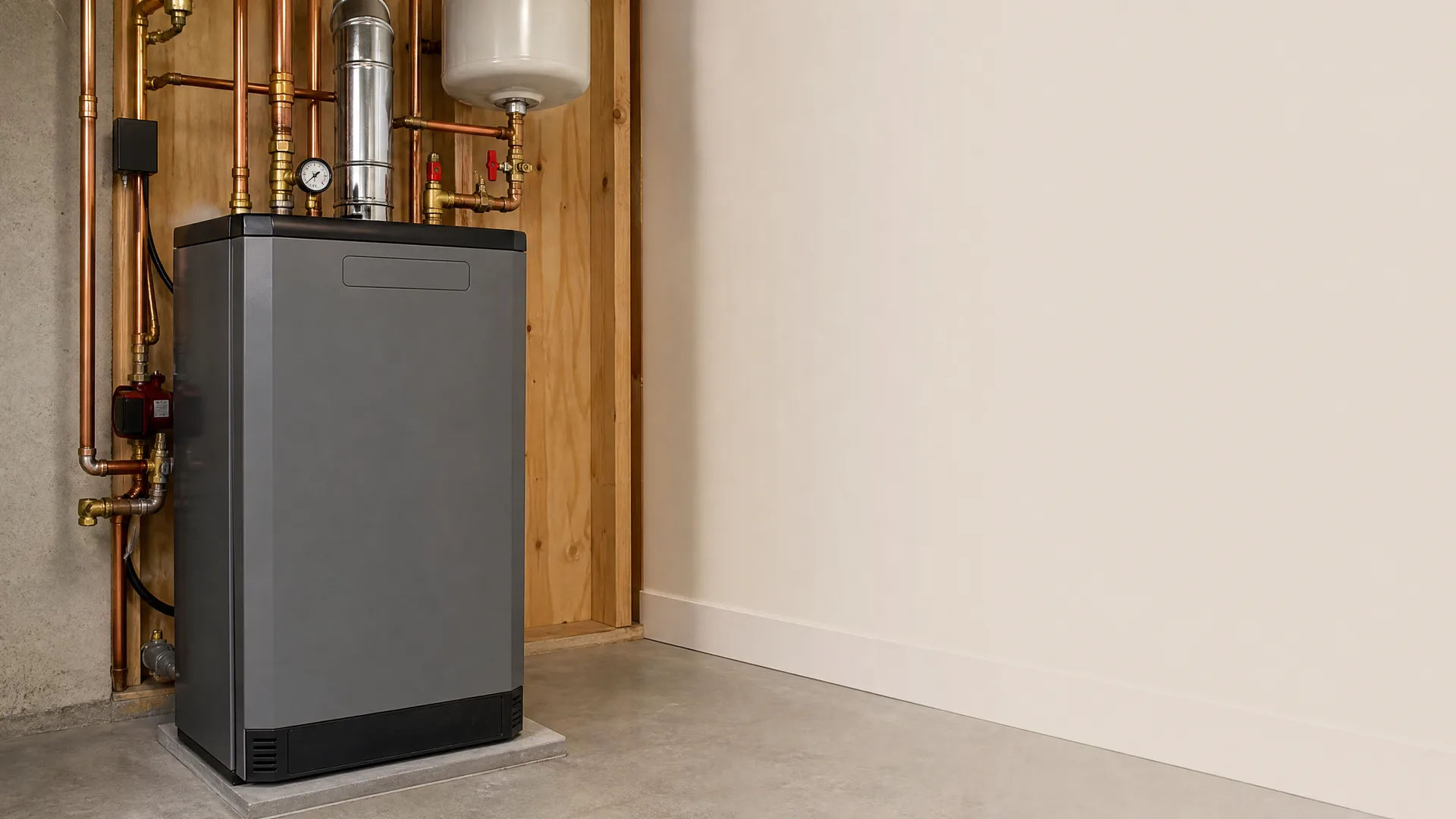
Hot water systems push water through a closed loop, and air that gets in collects at the top of each radiator because air is lighter than water. That pocket blocks water from filling the unit, so the top stays cold while the bottom runs warm. Opening the bleed valve lets the trapped air escape until water starts to come out, which is how you know the radiator can fill completely and heat end to end again.
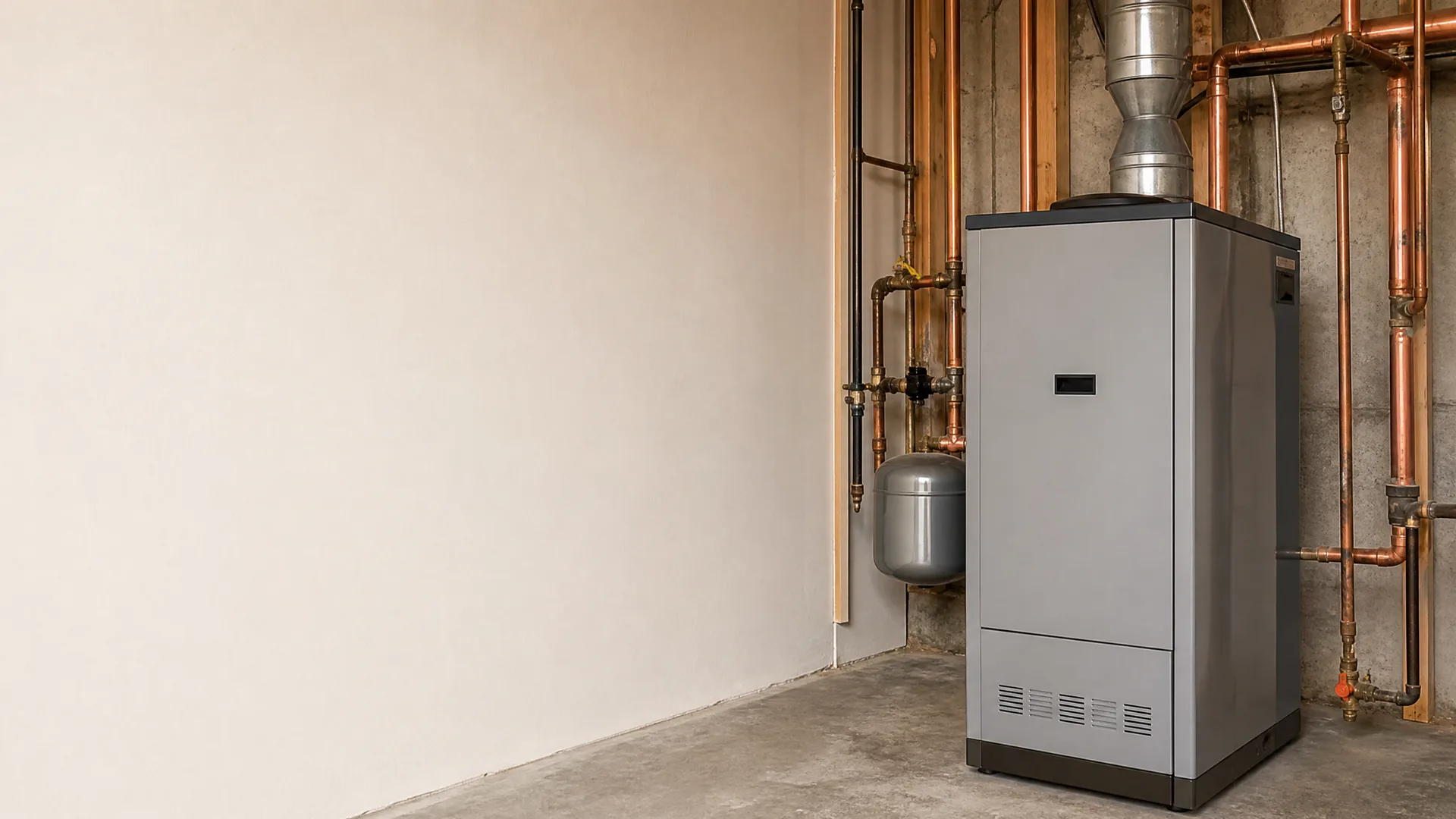
A circulator pump moves water from the boiler through the pipes to every radiator in the house. If it fails or seizes, water stops moving entirely, and every radiator in the loop stays cold no matter how long the boiler runs. You can sometimes feel this at the pump housing itself, warm on one side and cool on the other, which points to a pump that isn't circulating rather than a boiler that isn't firing.
It's usually one room that won't come up to temperature while the rest of the house is fine, and that's the part that's hard to figure out on your own. If the boiler is running and every other radiator is warm, it's natural to assume something is wrong with that one unit specifically, or that it's being shut out of the loop somehow.
When every other radiator heats up fine, the boiler and circulator are doing their job. The problem is local to that one unit. Air trapped at the top of it blocks water from filling the space, so it stays cold even though water is moving everywhere else in the loop. Bleeding it will usually tell you in a minute whether that's the cause, since water should start running out once the air clears. If bleeding doesn't help, check the valve at the base. It may be partly closed, or the lockshield valve on the return side may need adjusting so water flows through at the same rate as the rest of the system.
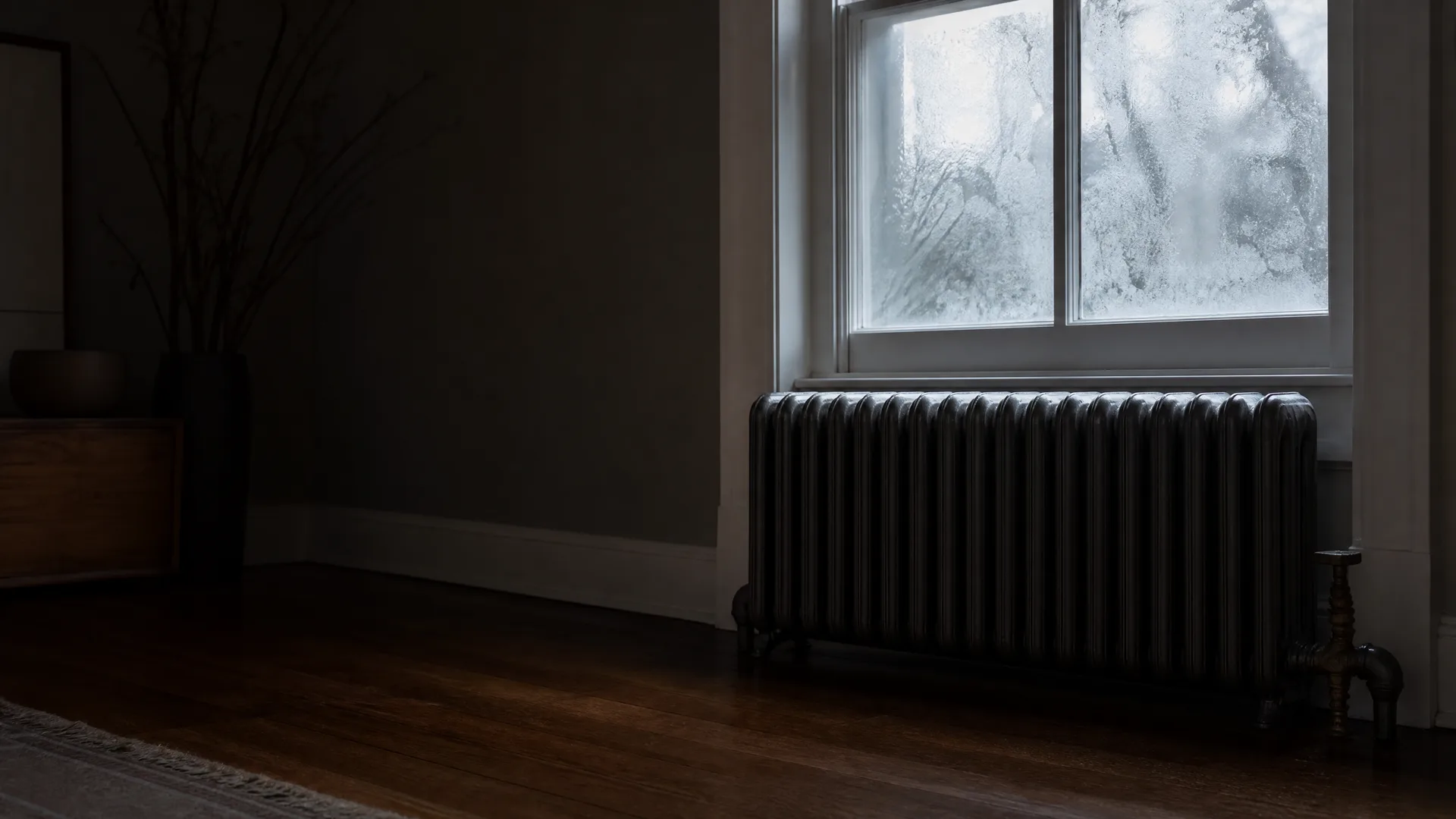
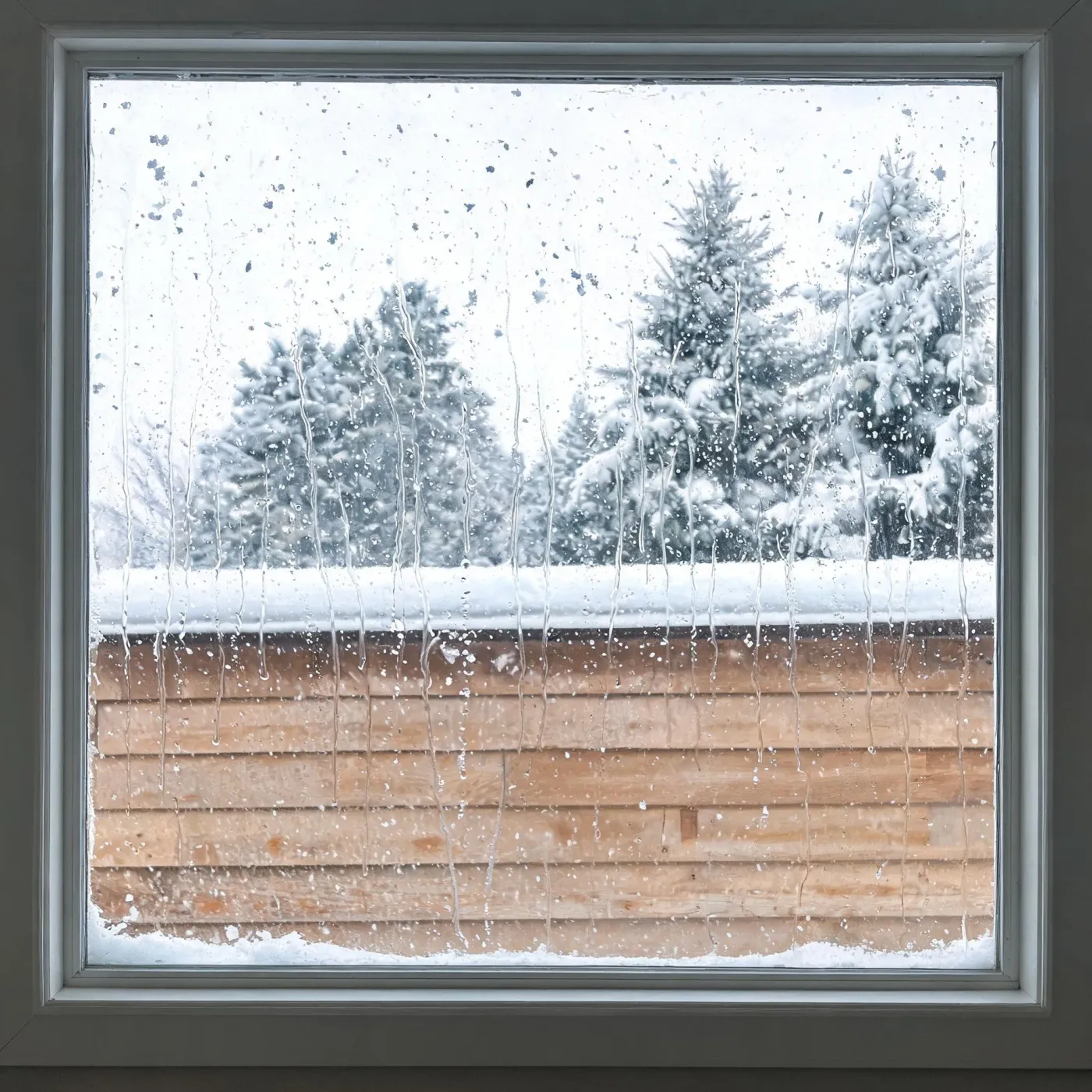
The window glass has ice on the inside, feathered across the corner where the cold gets in first. It's early, still dark enough that the streetlight is on outside. You're standing in socks on the living room floor, one hand flat against the radiator under the window, waiting to feel something. Nothing. The top is as cold as the sill. Somewhere down in the basement the boiler kicked on twenty minutes ago, you heard it, but whatever it's doing isn't getting here. You pull a blanket off the couch and wrap it around your shoulders and think about how long you can put off dealing with this before the rest of the house cools down behind it.
Describe what your boiler is doing once, in one form.
Sending the form costs nothing.
The thermostat is just a switch. Once it calls for heat, the boiler fires and the circulator pump takes over, pushing hot water out of the boiler and through the supply pipes to every radiator on the loop. Each radiator fills, gives off heat, and sends the cooled water back through a return pipe to the boiler to be heated again. That path has to stay open and complete the whole way around, because the system only works as a loop. Break it anywhere, trap air in it, or stop the pump, and the radiators downstream of the problem go cold.
A few parts control whether that happens. The circulator pump is what actually moves the water. If it seizes or burns out, the boiler can still fire and run on schedule while no water moves at all, so every radiator stays cold even though the boiler sounds fine. The aquastat sets how hot the boiler heats the water before it goes out to the loop. If it's set too low, the water circulates but never gets warm enough to heat the rooms. At the base of each radiator is a shutoff valve, and those can close partway over the years from corrosion or just getting bumped, cutting flow to that one radiator while the rest of the loop runs normally. The bleed valve at the top is the one part meant for you to use. Letting trapped air out through it is routine, but the pump, the aquastat, and a stuck shutoff valve are not something to open up yourself.
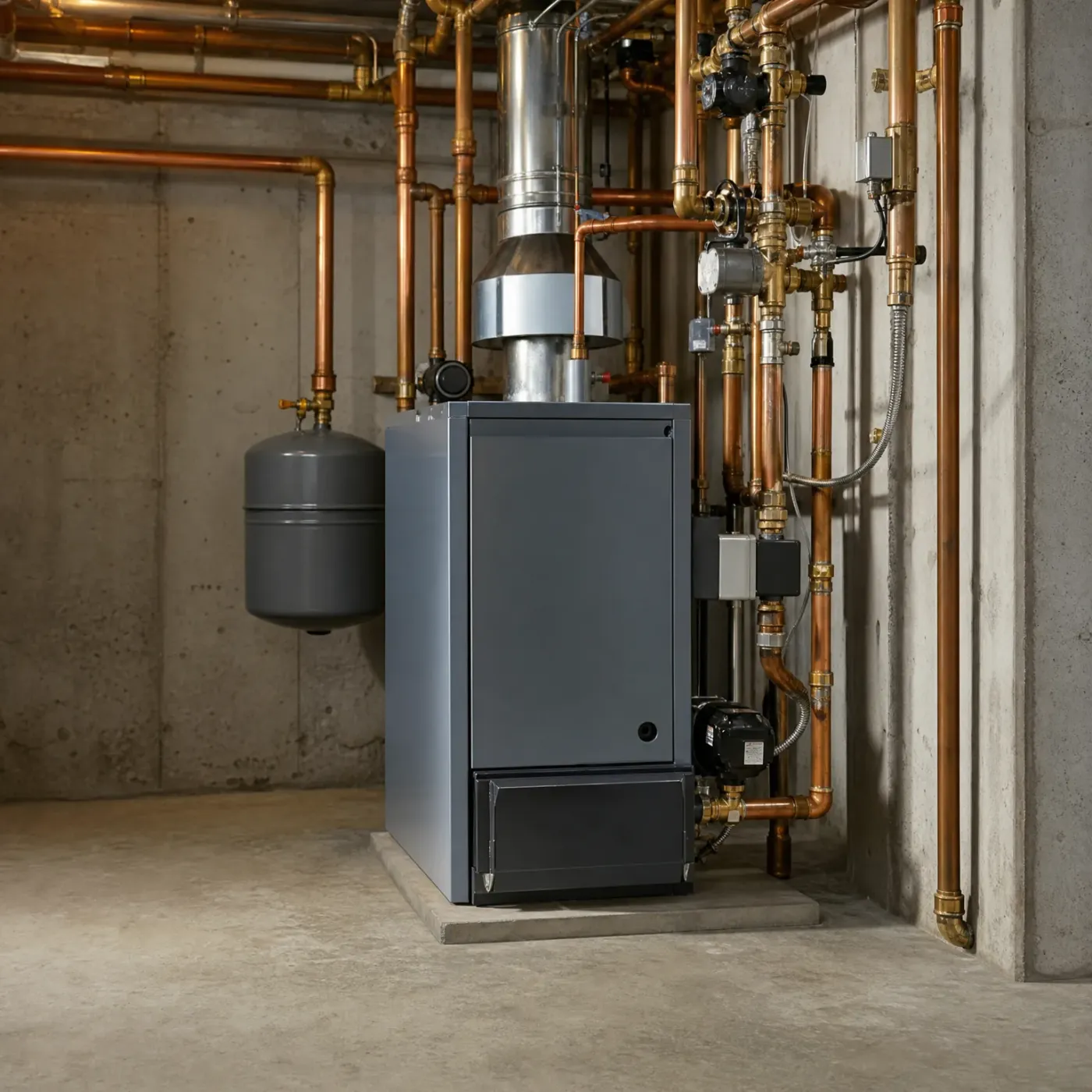
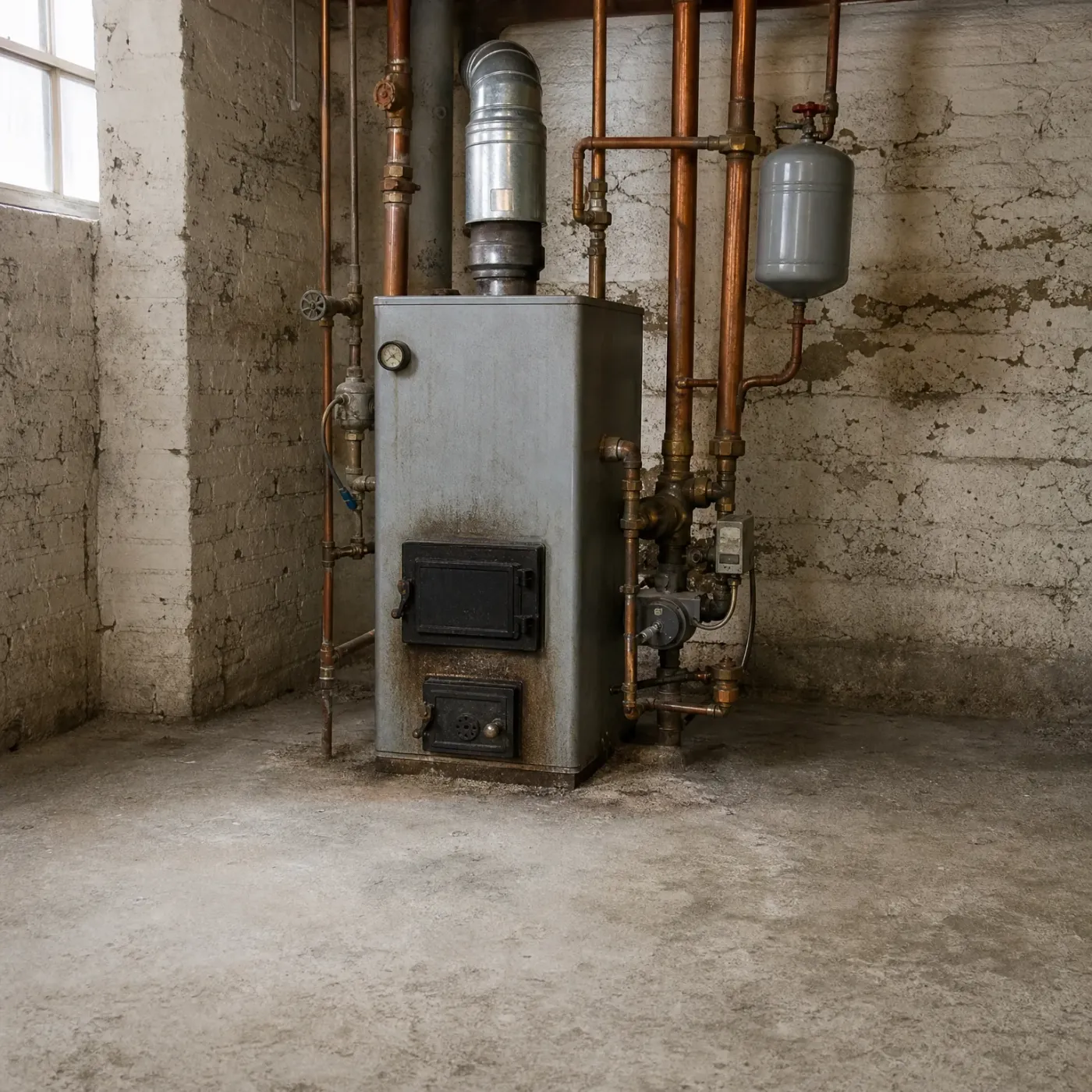
Every radiator in the loop has a thermostatic valve sitting on it, and that valve is making its own decision about how much water gets in, separate from whatever the boiler is doing. The whole loop runs on pressure, and a sealed system is built to hold a specific range. If yours is reading low, water is getting out somewhere, even if you can't see it. The expansion tank is part of that same balance. It gives the heated water somewhere to go, and if it's waterlogged, pressure swings instead of holding steady. The circulator pump either runs or it doesn't, and a seized one won't make noise when it should be pushing water out. Older cast-iron radiators add another layer, since sludge settles at the bottom first, which is a different problem than trapped air at the top. And a zone valve stuck in one position can send heat to half the house while an entire loop goes without.
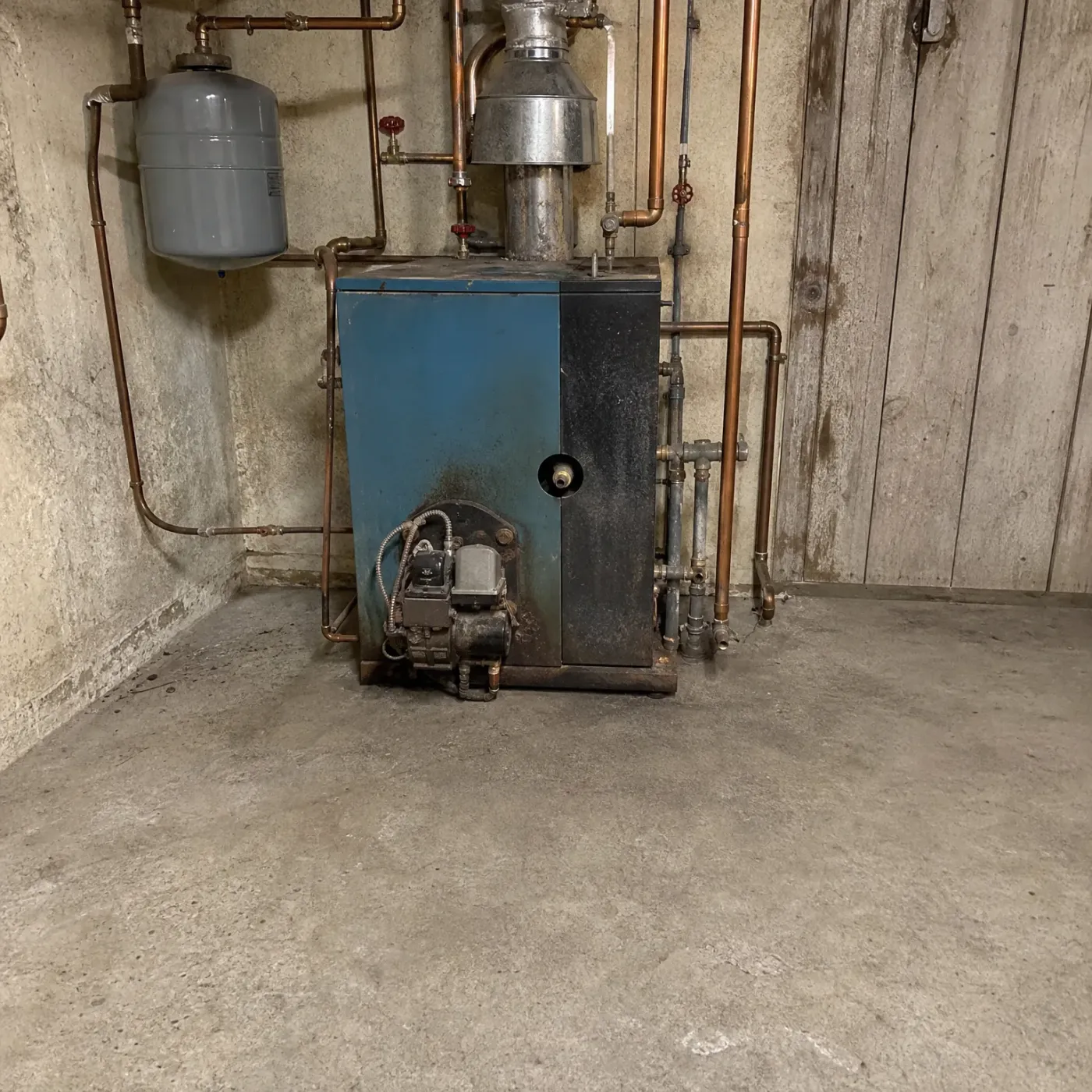
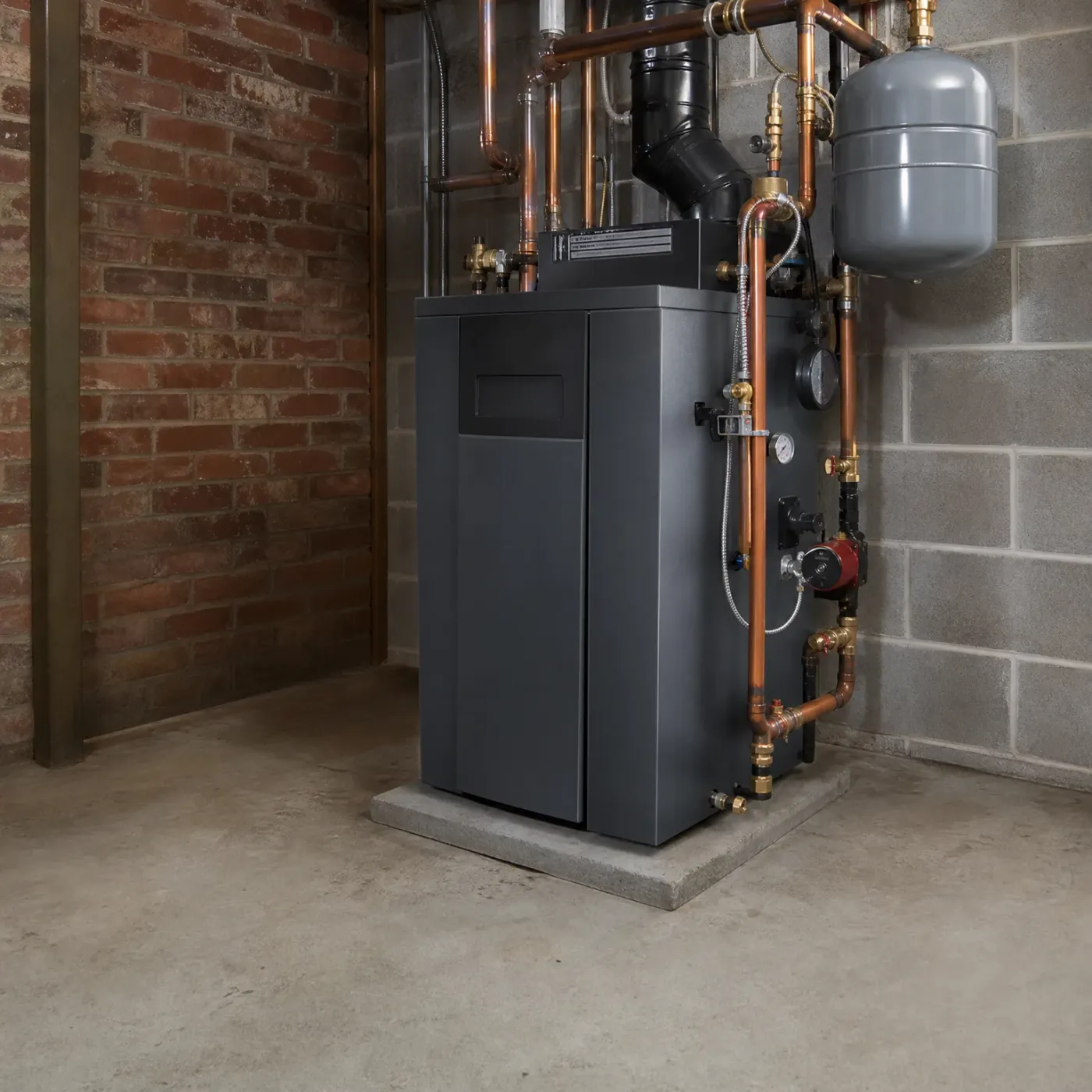
Winter nights average 30°F across Washington, according to NOAA climate data. At that temperature, your boiler isn't cycling on for a few minutes here and there. It's running long stretches to keep ahead of heat loss through the walls and windows, and every radiator on the loop needs to carry its share of that load. If air is trapped in one, or the circulator pump is struggling, that's the radiator that falls behind first, and you'll feel it as a room that never quite catches up no matter how long the boiler runs. The colder the night, the more that gap shows up fast, usually right where you're sitting.
NOAA nClimDiv 1991-2020 county normals weighted by homes


You're still hunting down a contractor, explaining the cold rooms again on every call, and comparing quotes while the house stays uneven.
Finding someone to look at the boiler and the loop stops being your job. The search ends and the rest moves forward without you managing it.
At 30°F, a boiler that's only warming half the loop falls behind fast. A circulator that's weak or trapped air cuts into how much heat actually reaches the far radiators, and on a night that cold, the gap between warm rooms and cold ones gets harder to ignore.
NOAA nClimDiv 1991-2020 county normals weighted by homes

Trapped air, a pump that's stopped, or a boiler that isn't firing the way it should. One of those three is why a room in your house is colder than the rest tonight. None of them get better on their own, and at 30 degrees outside, the gap between the warm rooms and the cold one only grows.
You could spend the next few evenings searching for a boiler contractor, calling a few, explaining the same cold room each time, then sitting with the quotes to figure out who to trust. Or you could send one form and let that search be someone else's job instead of yours. The radiator still needs a licensed hand on it either way. What changes is whether you're the one tracking down who that hand belongs to.






Describe your boiler job once, to one pro.
It costs nothing to send, and you don't have to hire anyone.