Profile view of a bearded man wearing a black baseball cap and a dark gray T-shirt against a plain light background.

Why your boiler makes a banging noise in Washington

Step 1 of 3: Equipment

A banging noise in your boiler almost always means mineral buildup or trapped air around the heat exchanger. Water hits a layer of scale or hard sediment sitting on the metal, flashes to steam, and the pop of that steam collapsing is the bang you hear. It tends to start quiet, a few knocks when the system fires up, then gets louder and more frequent as the buildup grows. Trapped air works the same way, moving through the pipes and hammering against fittings and valves until it finds its way out. Left alone, that sediment keeps the heat exchanger from transferring heat the way it should, which makes the boiler work harder to keep your home warm. It can also stress the metal over time. The noise itself won't go away on its own, and it usually gets worse through the colder months, not better.

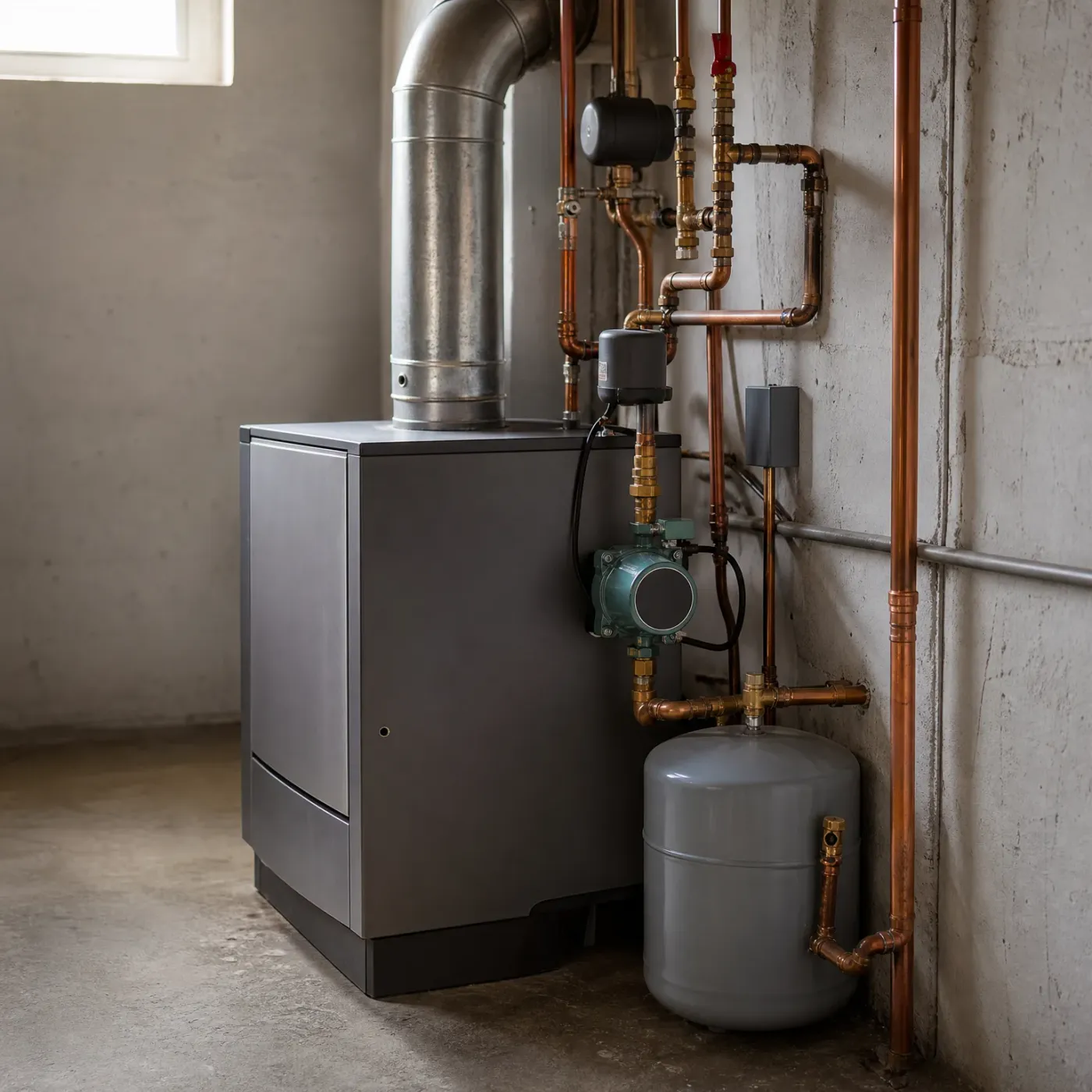
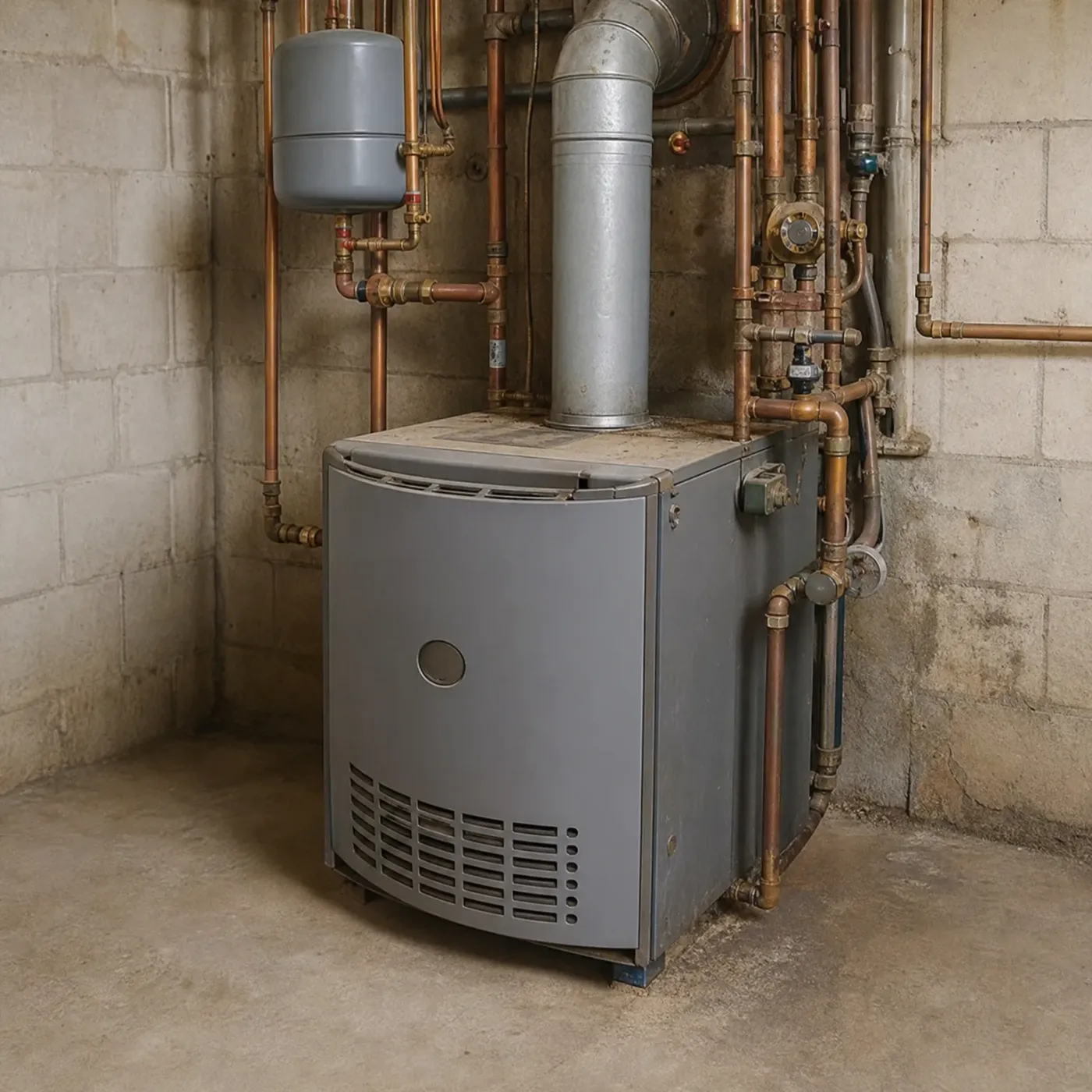
A gray residential boiler with a metal flue pipe stands in a concrete-block basement corner, surrounded by copper piping, valves and a gray expansion tank.
Before you get your boiler repair
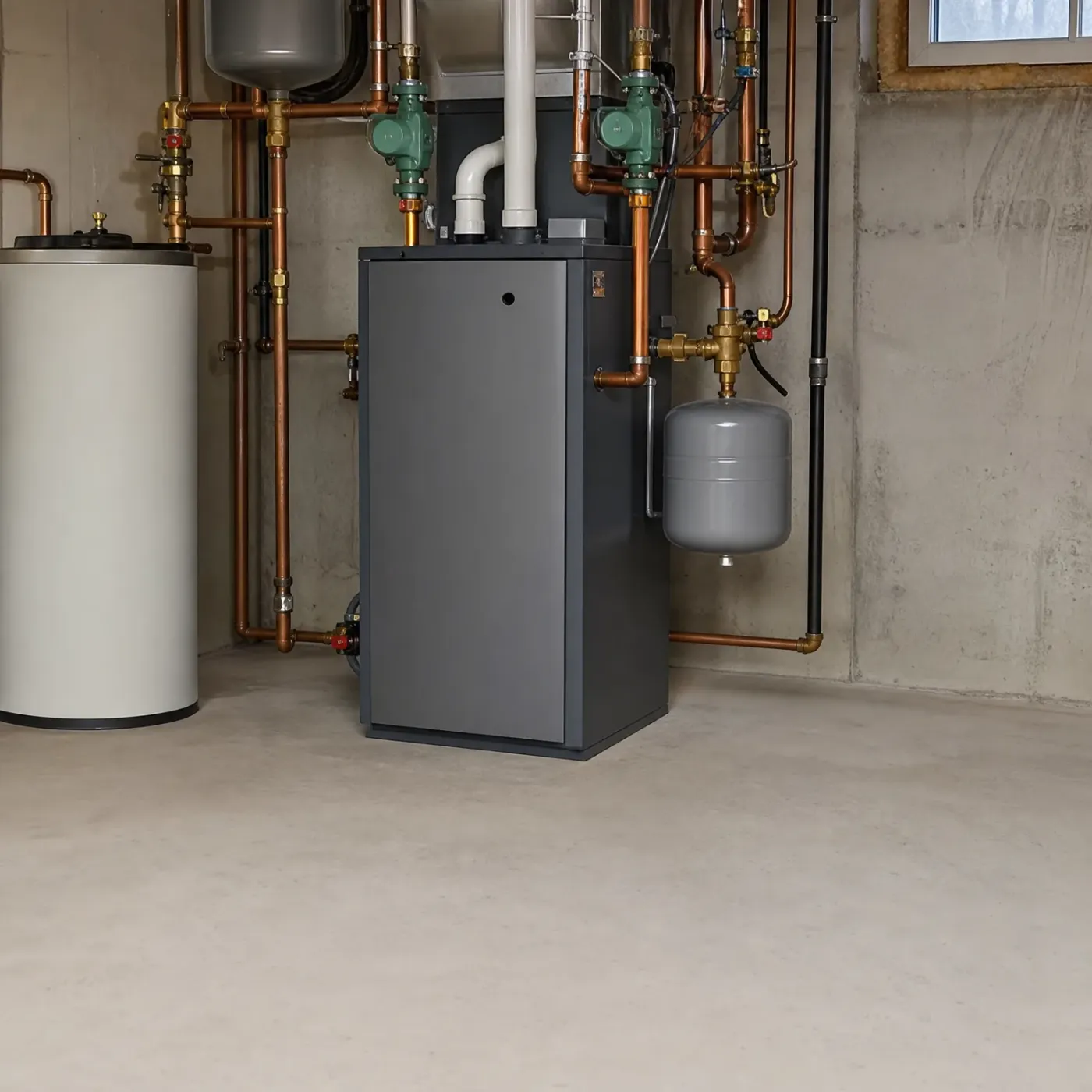
A dark gray floor-standing boiler in a concrete-walled basement, connected to copper piping, circulator pumps, a gray expansion tank, and a cream-colored storage tank to the left.
After you get your boiler repair

Why scale builds up on the exchanger

Boiler water sits in the same loop for years, and whatever minerals were in it when the system was filled stay behind as the water heats and cools. Those minerals settle out on the hottest surface in the system, which is the heat exchanger. Once a layer forms there, it holds heat against the metal instead of letting it pass into the water around it. That trapped heat is what flashes water into steam pockets. The thicker the layer gets, the more surface it covers, and the louder and more frequent the banging becomes.


Why trapped air does the same thing

A boiler loop has to stay full of water with no air pockets for heat to move the way it should. Air gets in during refilling, after a repair, or through a small leak somewhere in the piping. Because air compresses and water doesn't, a pocket of trapped air gets pushed around the loop as the pump runs and the water heats. When it reaches the heat exchanger, it reacts the same way scale does, trapping heat until a pocket snaps. Bleeding the system clears it, but if air keeps coming back, something is letting it in.

A woman with long wavy brown hair in a grey ribbed sweater sits on a couch indoors, looking toward a window, with a potted palm-like plant and fireplace behind her.
A woman with long brown hair wearing a green V-neck top and beige cardigan sits on a light sofa, looking off to the side, with a dining table, lamp and framed picture in the background.
A woman with long dark hair in a cream knit sweater sits on a beige sofa indoors, looking toward a bright window with a houseplant and framed picture in the background.
A woman with long dark hair in a green knit sweater sits on a couch indoors, smiling and looking toward a window with a blurred room behind her.

That banging carries through the ductwork of your house into the rooms where people are trying to sleep or get the kids ready for school. It doesn't stop on its own, and the noise is the easy part to notice. The scale causing it is already making the exchanger work harder to heat the same water.

Left alone, that scale layer thickens and the metal underneath it can crack from the uneven heat. A cracked exchanger means no heat on a cold morning and a bigger repair than the one you'd have paid for today.

Winter nights average 30°F statewide

Nights here sit around 30°F all winter, so your boiler is firing on and off for hours at a stretch to hold the house. Every one of those cycles pushes water across that scale buildup again, and each bang is another pass wearing at the same spot on the exchanger.

NOAA nClimDiv 1991-2020 county normals weighted by homes

A noise that quiets down on its own

Sometimes the banging eases off after a few days, especially after the system has been run hard through a cold stretch. That usually means air worked its way out of the loop on its own, or a small pocket of it shifted away from the exchanger. It's the better outcome of the two, and it costs you nothing to get there. But it doesn't tell you the scale is gone. Air comes and goes; mineral deposits don't. If the bang came back once already this winter, the quiet now is the system between cycles, not the problem solved. Washington winters hold steady and cold for weeks at a stretch, and a boiler that's already run through several of those cycles without the noise returning is a better sign than one that's only been quiet for a day or two.

A noise that keeps coming back

If the banging shows up most nights once the temperature drops, that's scale talking, not air. Trapped air works its way out eventually. A layer of sediment on the exchanger doesn't move unless something clears it off. Each cold night adds more cycles, and each cycle is another pass of water flashing against that same buildup. The sound won't change much night to night, but what's happening to the metal underneath it does. Waiting it out doesn't fix this one. A contractor can tell the two apart by how the system is running, not just by the noise, and get you matched with someone who can look at it before the next cold stretch sets in rather than during it.

A gray-haired woman in a cream knit sweater stands in a dimly lit kitchen at night, looking to her right, with a round loaf of bread in the foreground and a dark window and potted plant behind her.
A woman and a sleeping child wrapped together in a cream knitted blanket on a couch, with a potted plant, framed photo and lit lamp in the background.
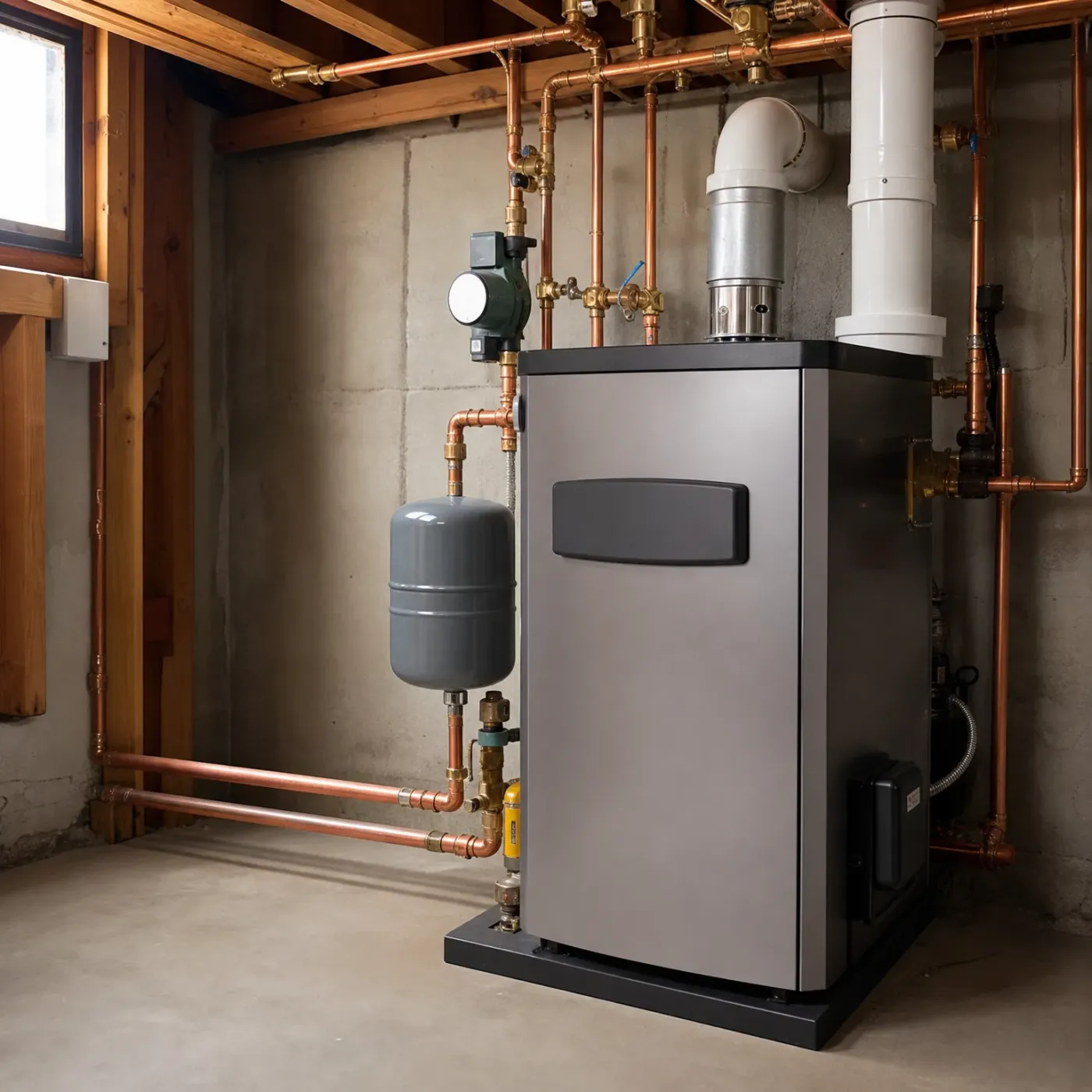
A gray boiler on a black base in a basement with concrete walls, connected to copper piping, a circulator pump, a gray expansion tank, and white and metal flue vent pipes.

Matched to your boiler job

Get the boiler repair search off your mind today.

A local pro who knows boilers gets your details and gets in touch.

Find a pro near me

No charge to send it. You decide if you hire them.

Is the banging in my boiler something I need to worry about?

Is the banging in my boiler something I need to worry about?

Yes, because the scale causing it only gets thicker over time

The noise itself won't hurt anyone, but what's making it will keep getting worse. Scale doesn't wear away on its own, it builds up layer on layer every time the water heats and cools. The longer it sits there, the harder the exchanger has to work to move heat into the water, and the more fuel or electricity it takes to hold the same temperature. Left alone long enough, that same spot on the exchanger can crack from the stress of uneven heating. A boiler repair technician can check the exchanger and flush the system before it gets to that point, which costs a lot less than replacing a cracked one.

  1. Water contacts scale built up on the heat exchanger surface

  2. Trapped heat flashes that water into steam pockets

  3. Cooler water around the pocket collapses the steam fast

  4. That collapse sends a shockwave you hear as a bang

A smiling man in a denim shirt and white t-shirt stands in an open dark doorway of a stucco house, facing a woman with long brown hair and a green jacket seen from behind in the foreground.

The bang is scale, and scale doesn't fix itself

The sound you're hearing is steam collapsing against the heat exchanger, and it will keep happening every time the boiler fires until someone descales it. Nothing about winter here lets that wait. Nights stay cold enough that the boiler is cycling on and off for hours most evenings, and each cycle is another pass of water hitting that same buildup.

You don't have to figure out how bad it is or whether it can hold until spring. Once you send the request, a contractor who handles boiler repair in your area will reach out and take it from there, matched to what you've described rather than a general callout. That's one less thing on your list while you're still making sure everyone in the house is warm and the mornings run on schedule.

A gray upholstered sofa with a matching cushion sits beside a potted plant and a wooden table holding a small green plant in a stone pot, near a curtained window.
A gray boiler with a metal flue pipe stands in a concrete-walled basement, connected to copper piping, a circulator pump, and a gray expansion tank on the floor.

A boiler pro near you

Get my match

Once you send the form, finding a pro is off your list.

There's no charge for the request.