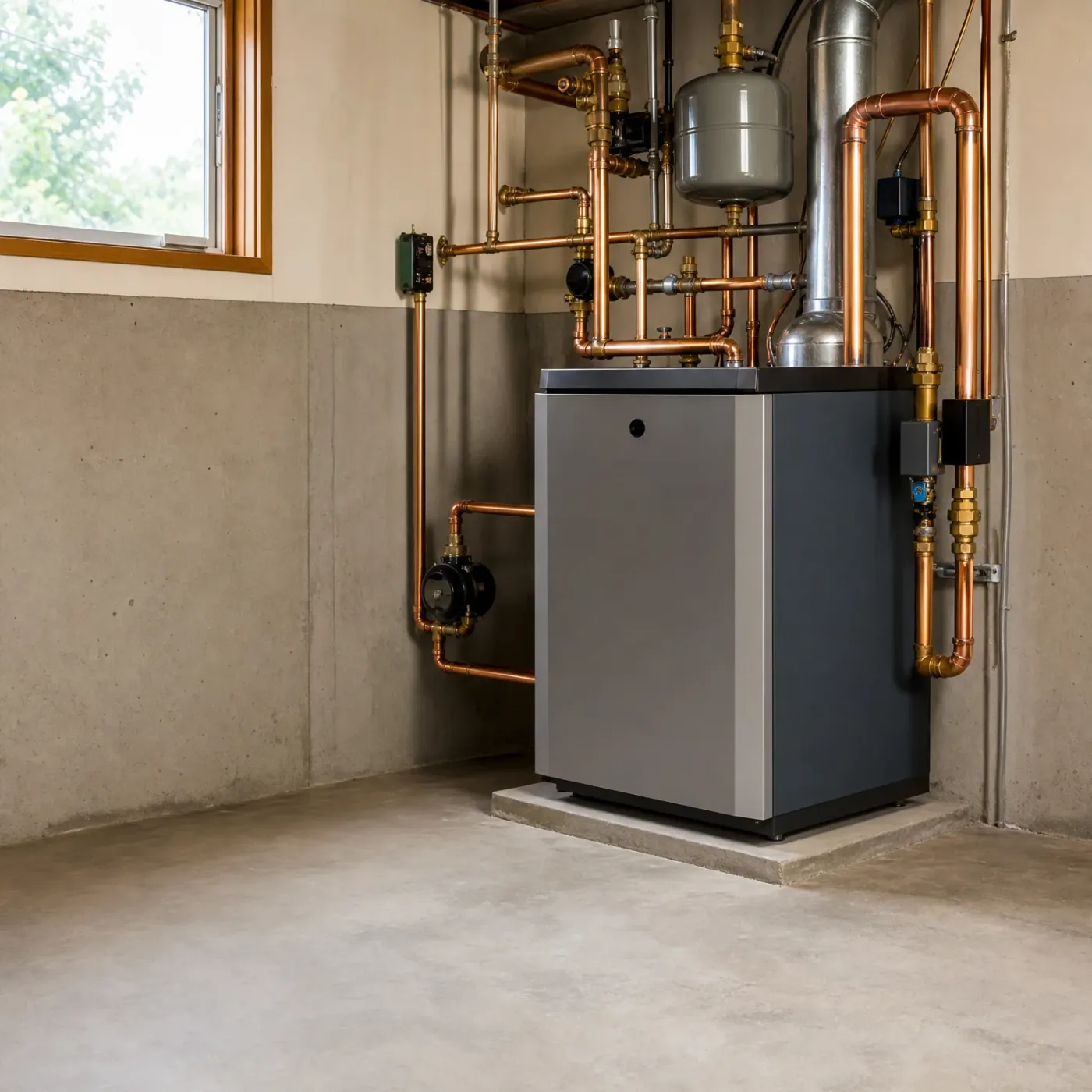
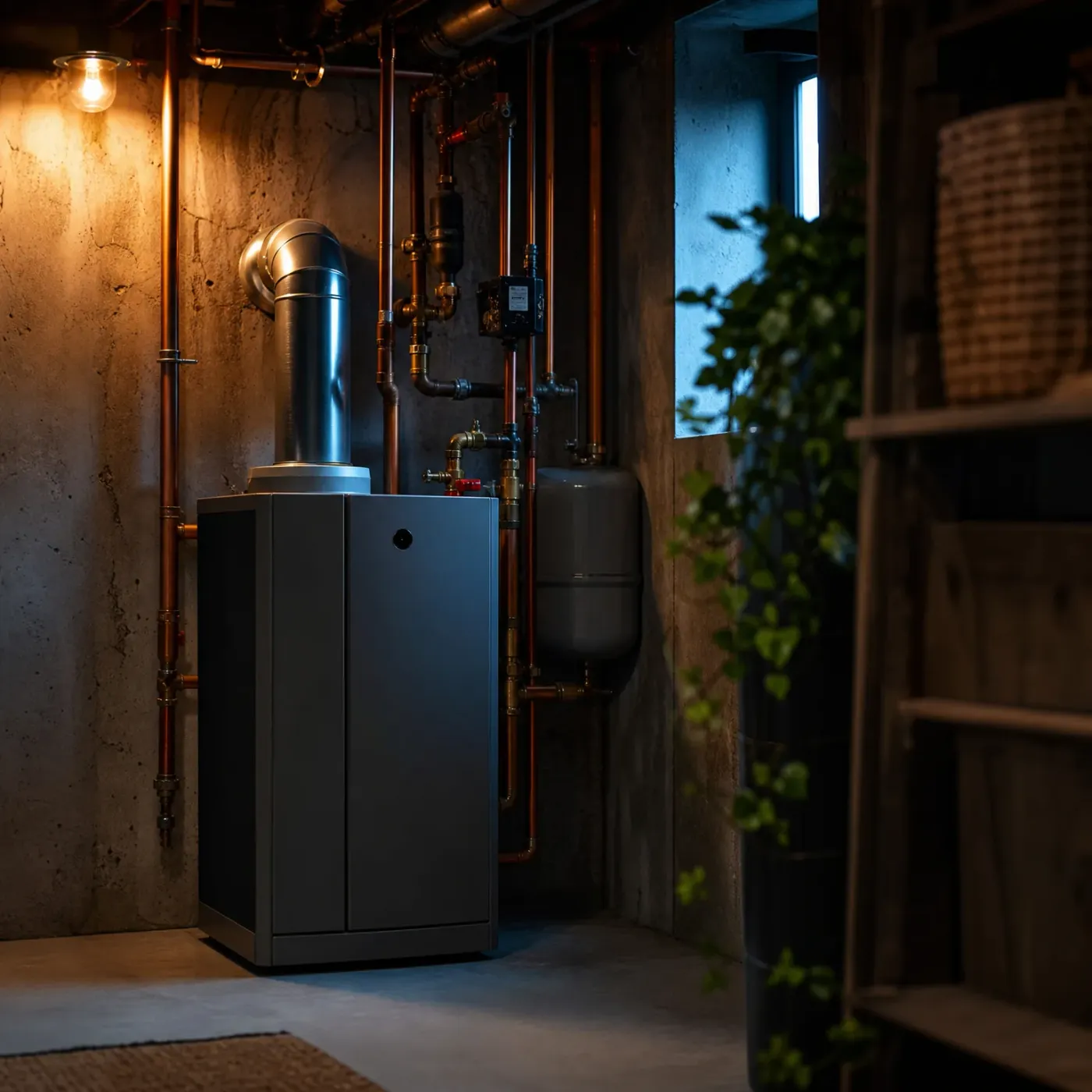
A dark grey floor-standing boiler with a metal flue stands against a concrete basement wall, surrounded by copper pipework, valves and a wall-mounted expansion tank, with ivy and a shelving unit at right.

A pro who works on boilers

Why your boiler is losing pressure in Washington

A boiler that keeps losing pressure usually has a leak somewhere, or a problem at the expansion tank or valves. Most homes in Washington heat with electricity, so a boiler here often means an older setup, and tracking down where the water is going takes some digging. Below is what to check first and when it's worth having someone look at it.

Match me with a pro

A boiler loses pressure because water is leaving the system somewhere it shouldn't. Most often it's a small leak at a pipe joint, a radiator valve, or the boiler itself. It can also be a failing expansion tank that's no longer absorbing pressure the way it should, or a pressure relief valve that's letting water out when it shouldn't need to. Since most homes in Washington heat with electricity, the boiler you have is often an older unit, and older systems tend to develop these small leaks and worn valves over time. If you're refilling the system every week or two, something is letting water out, and that water is going somewhere, even if you can't see it pooling. Left alone, low pressure can cause the boiler to shut off or run poorly, and a slow leak can quietly damage the spot it's coming from.

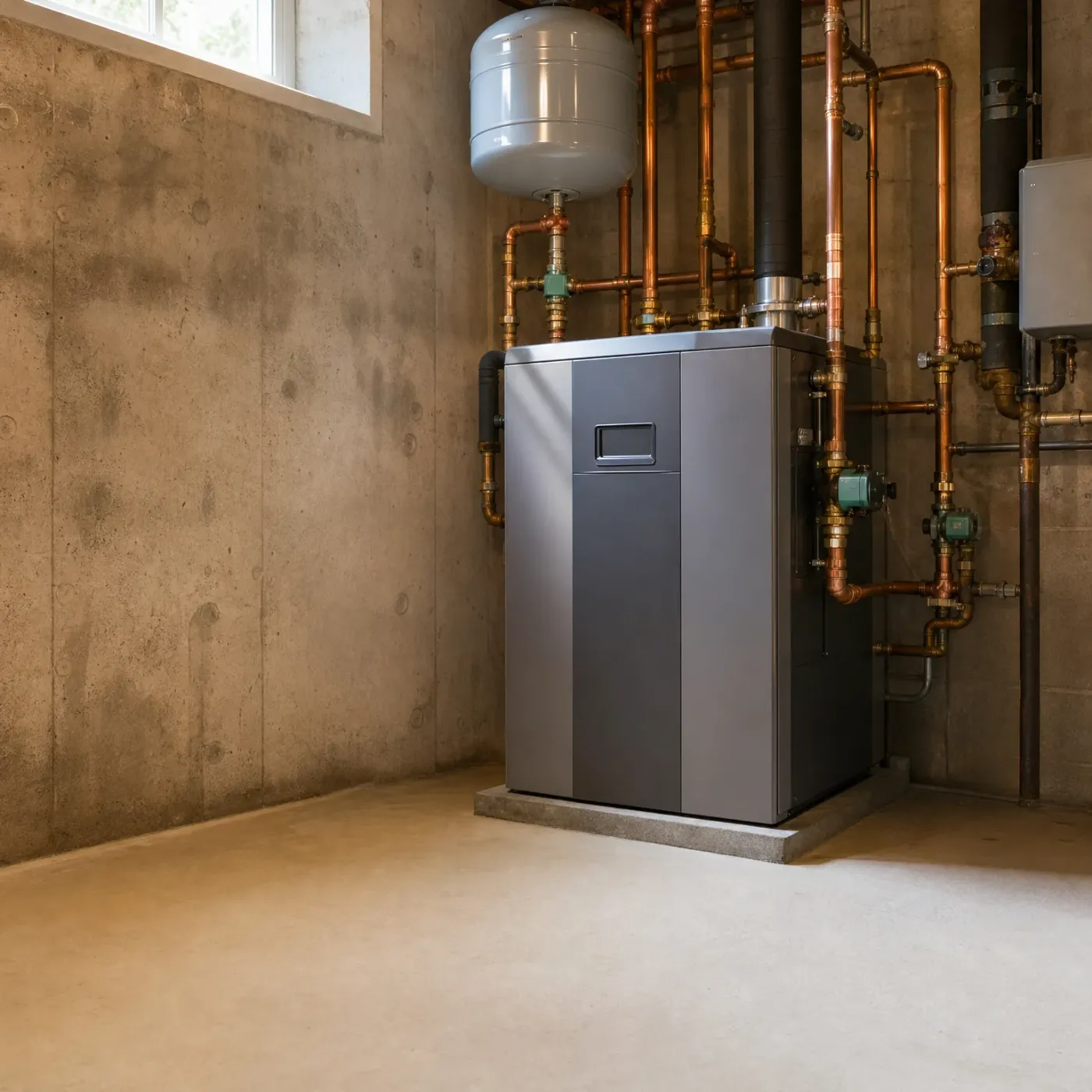
A gray boiler unit on a concrete pad in a basement corner, connected to copper piping, circulator pumps, and a ceiling-mounted expansion tank against bare concrete walls.
Pressure holds steady at the right level, with no drips at the joints or valves behind it.
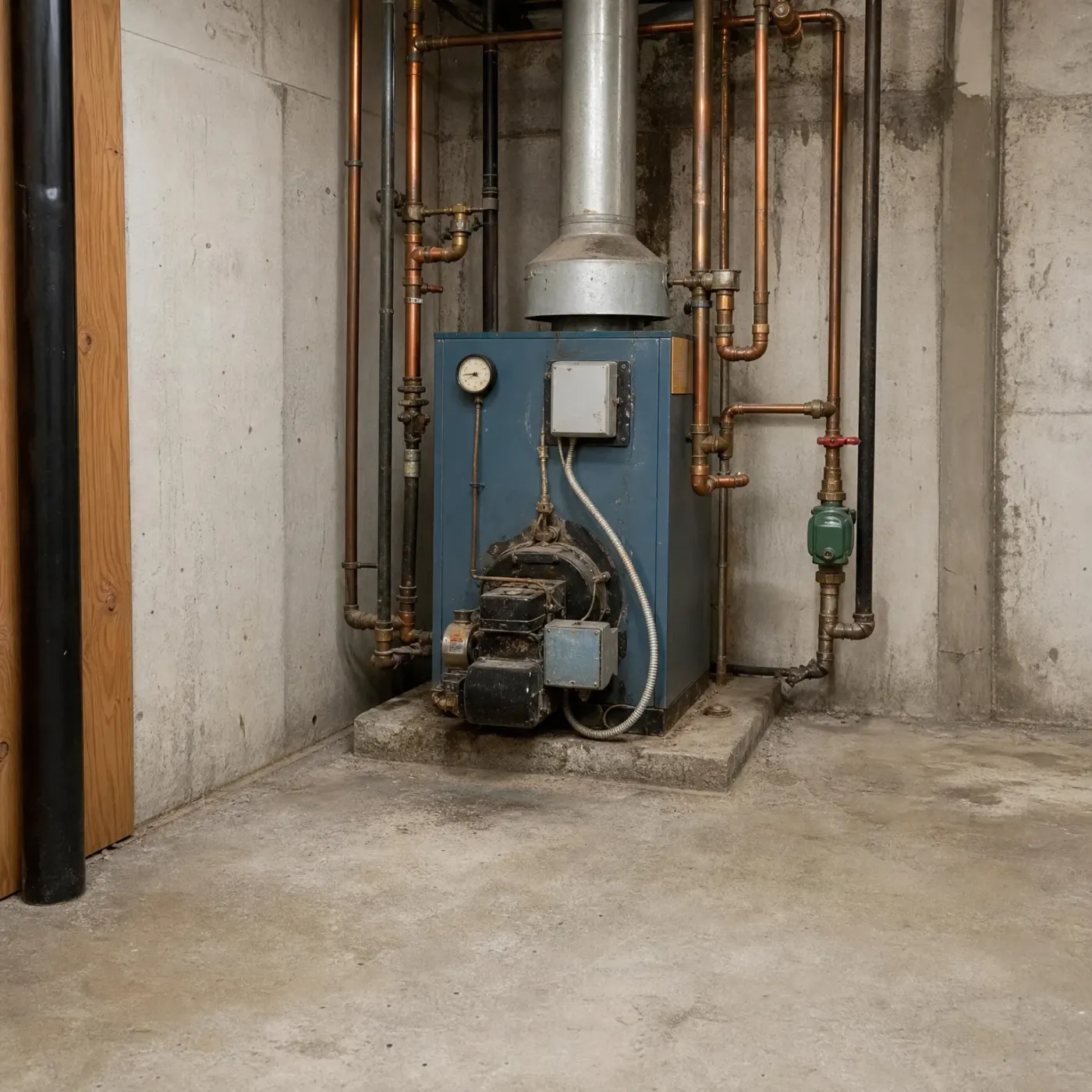
A blue oil-fired boiler with a pressure gauge, burner unit and metal flue sits on a concrete pad in a basement corner, surrounded by copper and black pipes against bare concrete walls.
The gauge reads low again, and the leak could be anywhere along that pipe run or at the tank.
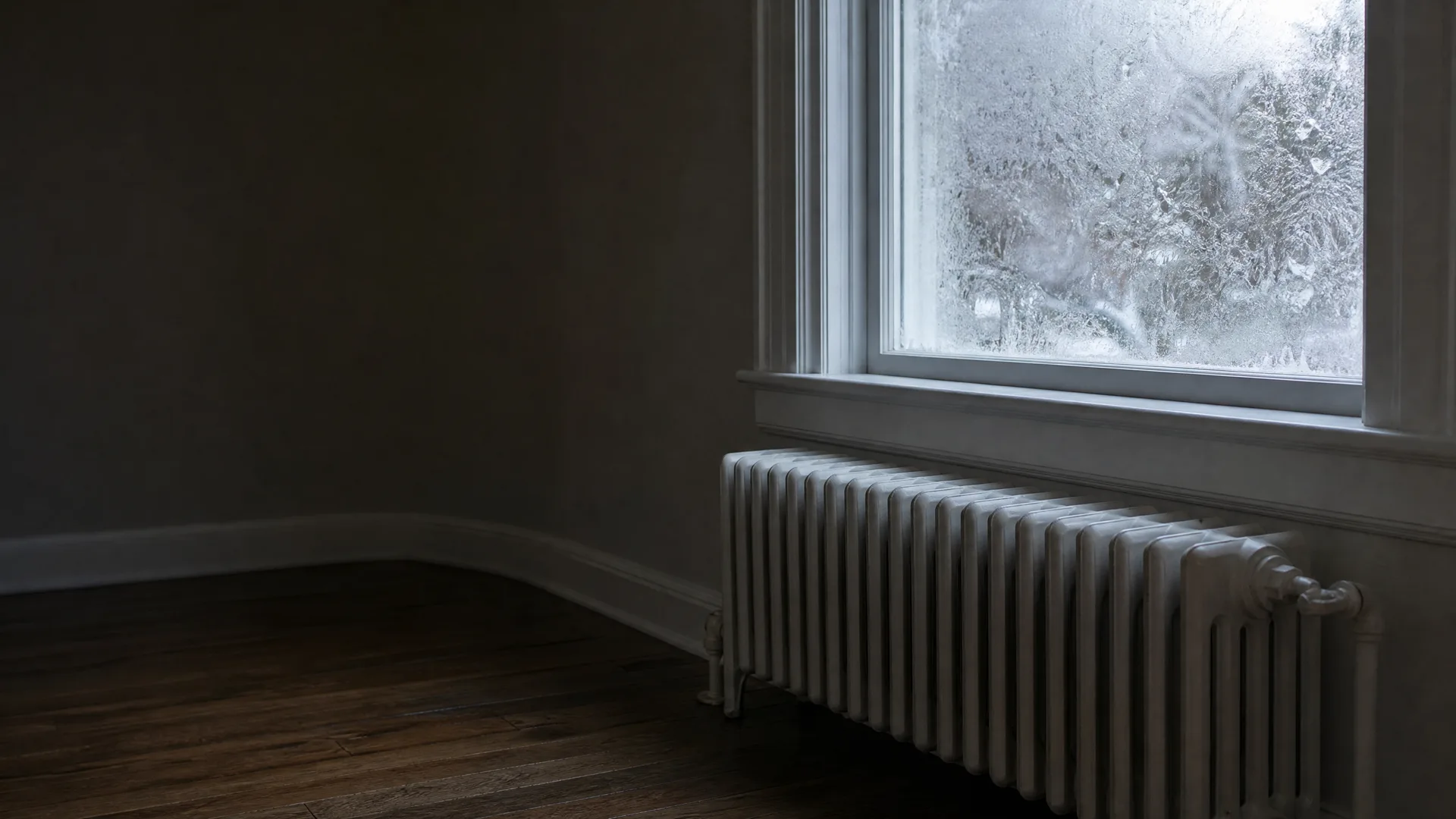
A white cast-iron column radiator under a frosted window in a dim empty room with dark walls and a wood floor, with snowy trees visible outside.

You come down before the thermostat's caught up and the living room still holds the night's cold. The radiator under the window ticks as it heats, but the glass above it has frost on the inside, a thin layer you can scrape with a fingernail. You check the gauge by the boiler out of habit now. It's low again, same as last week, and you've already topped it off twice this month. Outside it's the kind of January morning Washington gets, gray and just above freezing, not the hard cold some places see, but enough that the radiator has to work to keep up. You make a note to look at the pipe joints under the floor before it gets worse.
What are you noticing with your own boiler

You check the gauge and it's sitting below where it should be, maybe in the gray zone instead of the green. The boiler might shut down or lock out until you reset it. You hear a gurgle or hiss from somewhere in the pipes that wasn't there before. Radiators that used to heat all the way through now stay cold at the top, or cold in one room while the rest of the house is fine. If you've found a damp patch near a pipe joint or under the boiler itself, that's the leak, and it won't fix itself. Left alone, a boiler that keeps losing pressure will eventually stop heating the house when you need it most.

  1. Water escapes somewhere in the system, slowly dropping the pressure

  2. The gauge falls below the normal fill range over days or weeks

  3. Low pressure lets air into the system, causing gurgling or banging

  4. The boiler senses pressure is too low and locks out

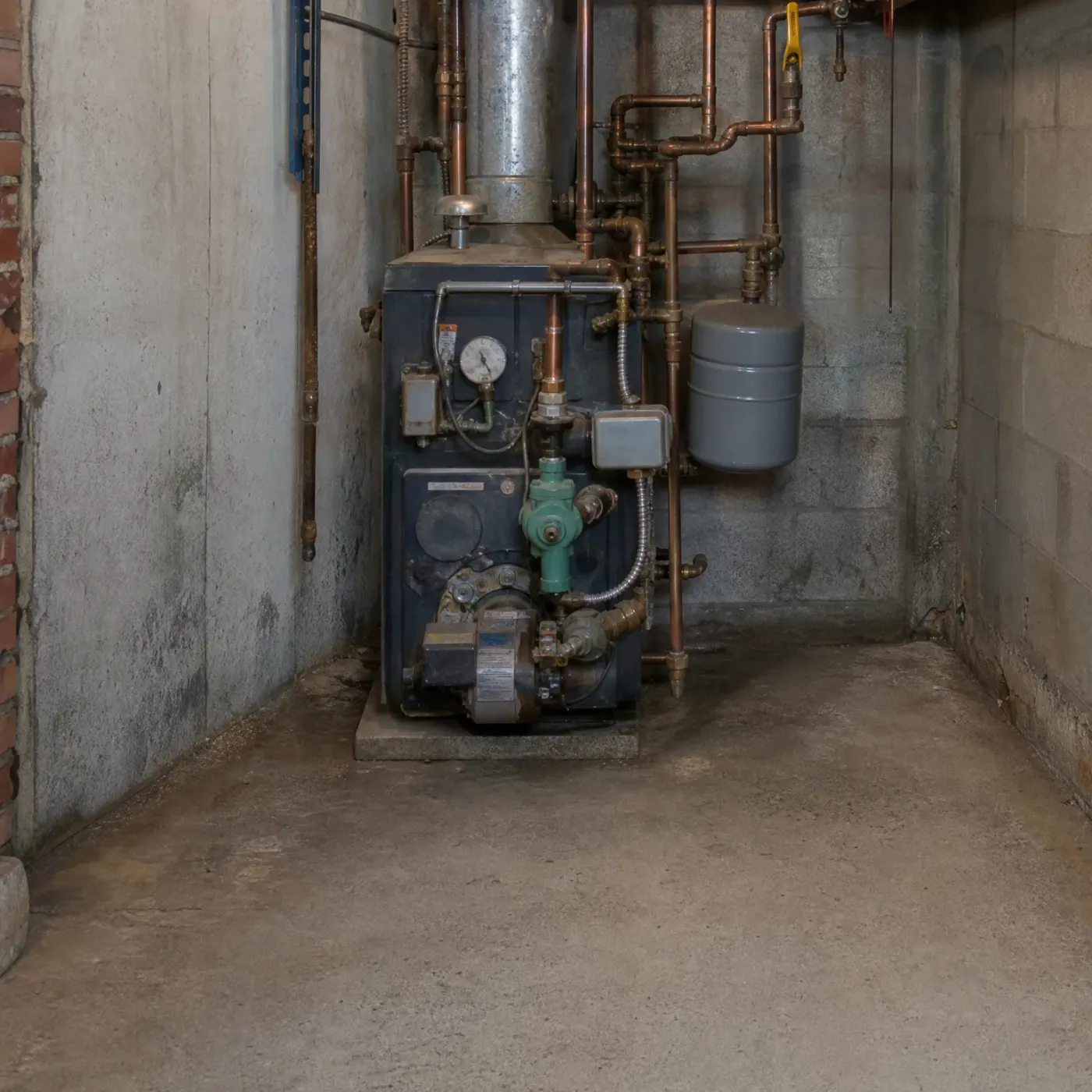
A dark cast-iron boiler with copper piping, pressure gauge, and a gray expansion tank sits on a concrete pad in a basement corner with concrete block and brick walls.
Before you get your boiler repair
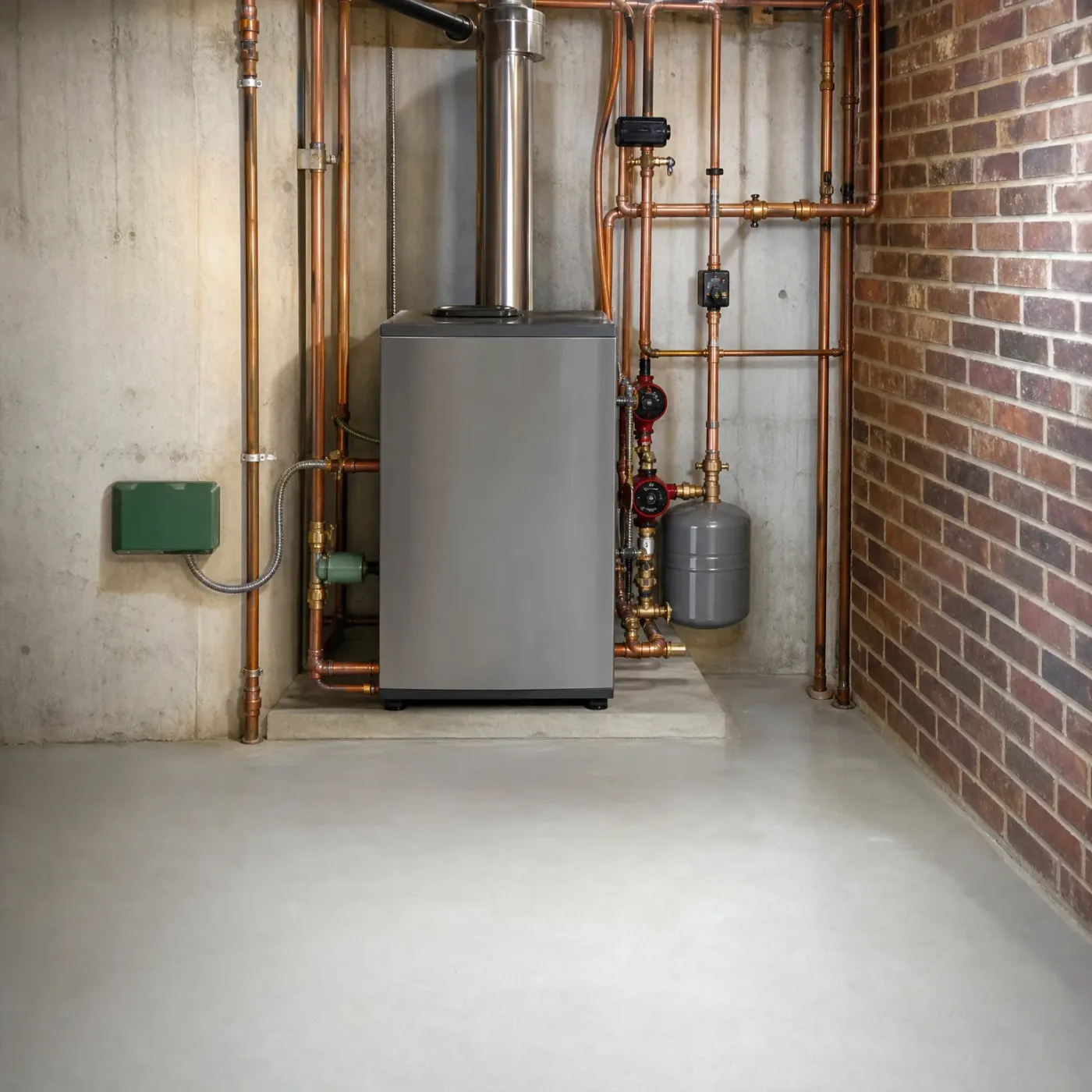
A gray boiler on a concrete pad in a basement, connected to copper piping, valves, pumps and a gray expansion tank, with a concrete wall on the left and a brick wall on the right.
After you get your boiler repair

A boiler that loses pressure is losing water somewhere, and there are only so many places it can go. The relief valve lets water out when pressure climbs too high, and once that water is gone it doesn't return on its own. A pipe joint or radiator valve that's sat untouched for years can start weeping slowly, often with nothing to see on the floor. Pinhole leaks work the same way, bleeding off pressure over weeks rather than all at once. Inside the system, the expansion tank holds a cushion of air that gives the water room to expand as it heats. When that tank waterlogs, pressure stops holding steady and starts swinging instead. Some setups have a filling loop that tops up pressure automatically, which keeps things looking normal right up until the loop itself fails or a leak outpaces it. Even with nothing wrong, a gauge checked first thing in the morning will read lower than one checked while the boiler's running, since the system contracts as it cools overnight.

Where the water actually goes

  • The pressure relief valve opens on its own once system pressure climbs too high, and water it releases never goes back in.
  • A pinhole leak in a radiator or pipe can lose enough water over weeks to drop pressure without ever leaving a visible puddle.
  • The expansion tank holds a pocket of air that compresses as water heats and expands, and a waterlogged tank lets pressure swing instead of holding steady.
  • Some boilers have an automatic filling loop that tops up pressure on its own, which can hide a slow leak until the loop itself fails.
  • A corroded pipe joint or a radiator valve that's never been touched can start weeping slowly, and that's often where the water is actually going.
  • Pressure readings drift lower in a system that's cooled down overnight, so a gauge checked cold can look different from one checked while the boiler's running.
A woman in a gray turtleneck sweater stands by a window looking outside at snowy ground, with a dimly lit living room containing a sofa, shelves, lamp and a lit candle behind her.
A woman in a cream cable-knit turtleneck sweater stands in a warmly lit living room with a fireplace and shelves behind her, looking out a window toward snow-covered trees and a railed deck.
A woman in a cream knit turtleneck sweater stands by a window looking out at snow, with a lit fireplace, sofa and lamp in the room behind her.
A woman in a gray knit sweater sits by a window looking out at falling snow, with a dimly lit living room containing a sectional sofa, pillows, a lamp and houseplants behind her.

Get your boiler to the right pro

A boiler that's lost pressure won't fix itself, and running it low strains the system every time it cycles. Finding where the water's going means checking joints, valves, the expansion tank, sometimes opening up sections of pipe you can't see from the outside. That's not a job most people can do over a weekend with a wrench and a flashlight, and it's not one you want to guess at, since a locked-out boiler in the middle of a Washington winter leaves you without heat while you sort it out. Tracking down a contractor yourself means calling around, describing the same gauge reading and the same gurgling sound to each one, then weighing quotes you have no easy way to compare. Hand that off instead. Someone who does this work in your area can look at what you're seeing and figure out where the pressure's actually going, so you're not left guessing at a problem that only gets worse the longer the boiler runs on low.

A gray floor-standing boiler on a concrete pad in a basement corner, connected to copper piping, brass valves, a circulator pump, an expansion tank, and a metal flue, with a window at upper left.

Running at the right pressure

This is what the gauge should show most days: a steady reading in the green, water moving quietly through the copper lines, the circulator pump and expansion tank doing their job without complaint. No drips at the fittings. No reason to think about it.

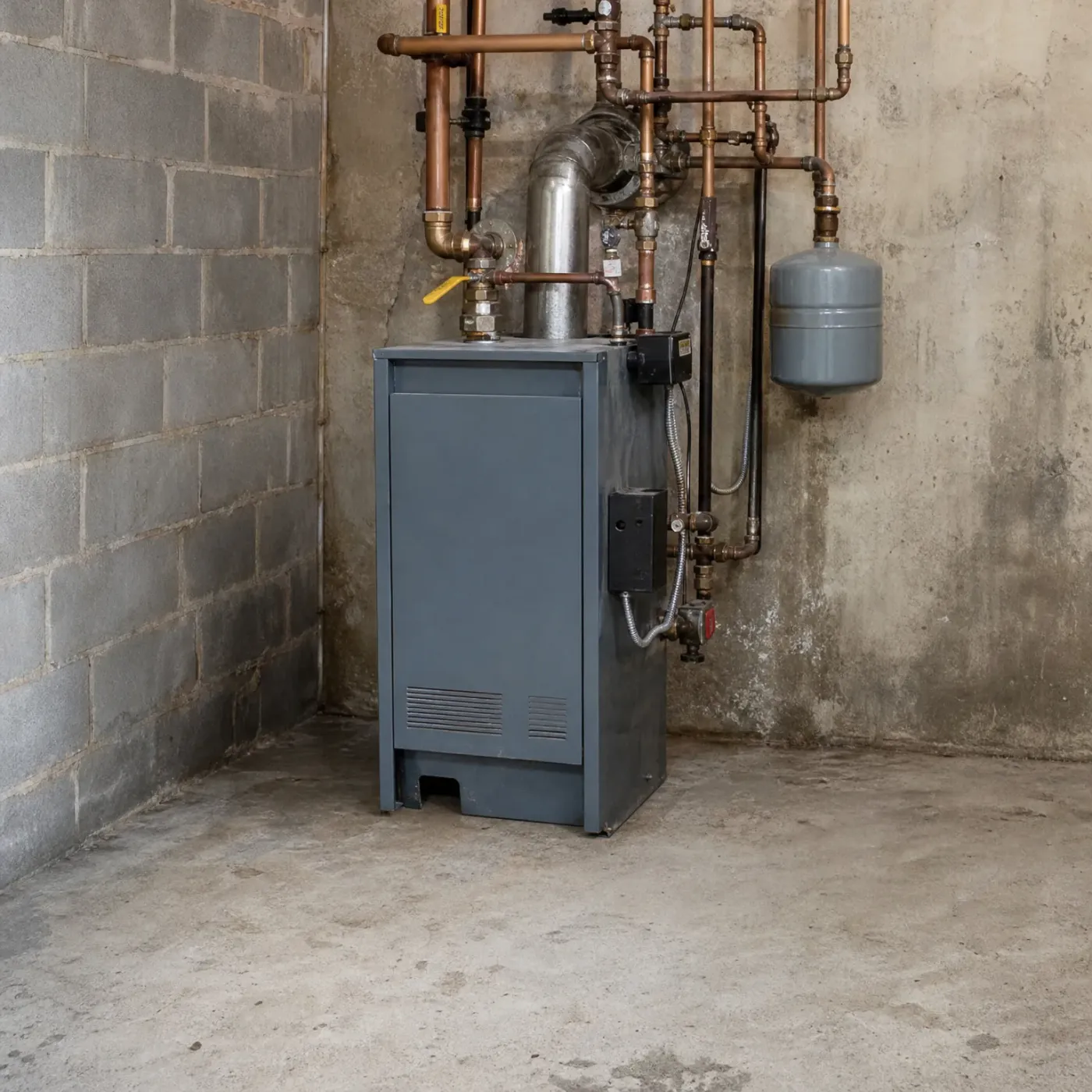
A gray floor-standing boiler in a basement corner with copper and black piping above it, a flue vent, and a gray expansion tank mounted on the concrete wall beside a concrete block wall.

Pressure dropping again

This is the same kind of setup after water starts leaving somewhere it shouldn't. The gauge sits low, the expansion tank on the wall may not be holding charge the way it used to, and the leak could be at any joint along that copper run, not just the one you can see.

A woman in a cream cardigan and jeans stands with one hand raised facing an open front door of a gray horizontal-siding house, with a black lantern wall light, a potted shrub with yellow flowers, and a stone-faced porch column.

What a dropping gauge means for your house

A boiler running low on pressure doesn't just stop heating evenly. It can lock out overnight and leave you waking up to cold radiators, which matters more here than it would somewhere mild, since a lot of Washington winters still bring stretches of real cold even with electric heat carrying most homes. If your boiler is the main source of heat for part of the house, a lockout means no heat there until someone resets it and finds the leak. Left alone, the small drip at a joint or valve that's causing this can also mean water finding its way into framing or flooring you can't see from the room.

You don't have to track down the leak yourself, crawling behind radiators or calling a handful of plumbers to compare who can look at it first. Once you answer a few questions about what your gauge is showing and what you've heard or noticed, a contractor who works on boilers in your area gets in touch with you directly. No repeating the story to three different companies, no sorting through quotes on your own.

A living room corner with a light beige sofa holding a textured taupe cushion, a large ceramic vase of olive branches by a window, a framed neutral artwork on the wall, and a dark bowl with stacked books in the foreground.
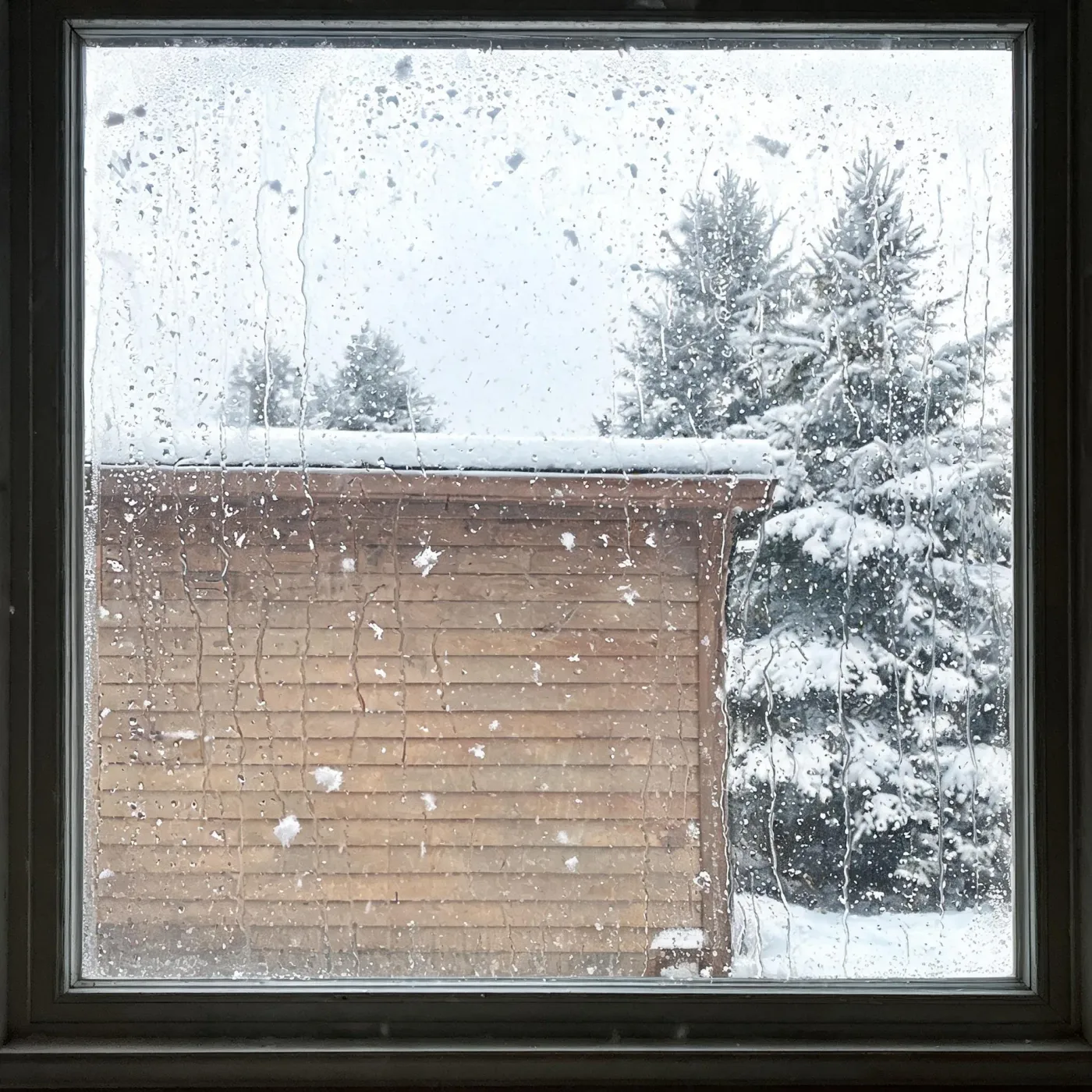
View through a condensation- and droplet-covered window pane of a snow-covered wood-sided building roof and snow-laden evergreen trees under an overcast sky.

Statewide, winter nights average 30°F, according to NOAA climate data. That's cold enough for a boiler to run long stretches overnight, and every stretch it runs, the system is under pressure the whole time. A small leak that might sit unnoticed in milder weather shows up faster now, because the boiler is cycling more to keep up. You might catch the gauge dropping between fill-ups you didn't used to need, or notice the radiators taking longer to heat through on the coldest nights. That pattern is usually the first sign something is letting water out slowly.

NOAA nClimDiv 1991-2020 county normals weighted by homes

Refill It, or Fix the Leak

Topping off the water

  • Raises the gauge back to the green zone for now, so the boiler stops locking out and heat comes back on.
  • Does nothing about where the water went, so the same leak keeps draining pressure on the same schedule.
  • You're back at the gauge again in a week or two, turning the same valve to refill it.
  • If the loss is from a failing expansion tank, adding water just means more water for the tank to mishandle.
  • Cheap and fast, but it's a workaround, not something that holds through a cold stretch on its own.

Finding and fixing the leak

  • A contractor pressure-tests the system and checks joints, valves, and the expansion tank to find where water is actually leaving.
  • Once the leak or the failing part is found, the fix holds instead of needing a refill every few weeks.
  • Means not searching for who does this kind of work, calling a few places, and explaining the dropping gauge each time.
  • Takes more than turning a valve, since finding a pinhole leak or a bad tank bladder isn't always obvious from outside the pipe.
  • Worth doing before a stretch of 30°F nights, when the boiler is running long hours and a small leak has more time to matter.
A bearded man in a plaid flannel shirt stands in a kitchen looking out a window toward snow-covered shrubs, with a steaming mug on the windowsill and potted plants on a shelf behind him.
A smiling man with dark curly hair in a navy t-shirt sits on a gray couch indoors, with a large-leafed plant and a window in the background.

Winter nights average 30°F statewide

At 30°F overnight, your boiler isn't cycling on and off, it's holding a long steady burn to keep the house warm. That means hours of sustained pressure on every joint and valve, and a slow leak that might hold at low pressure for a night somewhere milder will show up here.

NOAA nClimDiv 1991-2020 county normals weighted by homes

Where the water is going

  • A boiler that keeps losing pressure has water leaving the system somewhere, and topping it off only resets the clock.
  • The leak can be at a pipe joint, a radiator valve, the expansion tank, or the boiler itself, and finding it often means opening up sections you can't see.
  • Left alone, the pattern repeats on its own schedule: pressure drops, the boiler locks out, and the house goes cold until someone resets it.
  • A contractor who knows boilers can trace the water to where it's actually going instead of guessing at the gauge.
  • Getting matched with one means skipping the calls to different companies, repeating the same explanation each time, and sorting through quotes on your own.
  • Where the pressure is going is a question with a real answer, and it's worth running down before another cold night does the deciding for you.

A boiler losing pressure isn't a mystery with no answer, it's water leaving the system somewhere, and that somewhere can be found. A joint that weeps a little, a radiator valve that's never quite sealed, an expansion tank that stopped holding its charge. Each one drops the gauge the same way, and each one keeps dropping it until it's found and fixed. Topping off the water buys a night or two, not a solution. The boiler will lock out again on its own schedule, and the house will go cold again until someone resets it, probably at an hour that isn't convenient.

Tracking down the actual leak usually means checking more than the one spot that seems obvious. A pipe run behind a wall, a fitting under the floor, a tank that looks fine from the outside but isn't holding pressure anymore. That's not a weekend project for most homeowners, and guessing wrong means paying for work that doesn't touch the real problem.

What a contractor does with this is trace it properly instead of patching the symptom. Getting matched with one means you don't have to call around to five companies, explain the gauge and the gurgling and the cold mornings five separate times, then sit with a stack of quotes trying to compare them against each other. One match, one explanation, and someone who's seen this exact pattern before takes it from there.

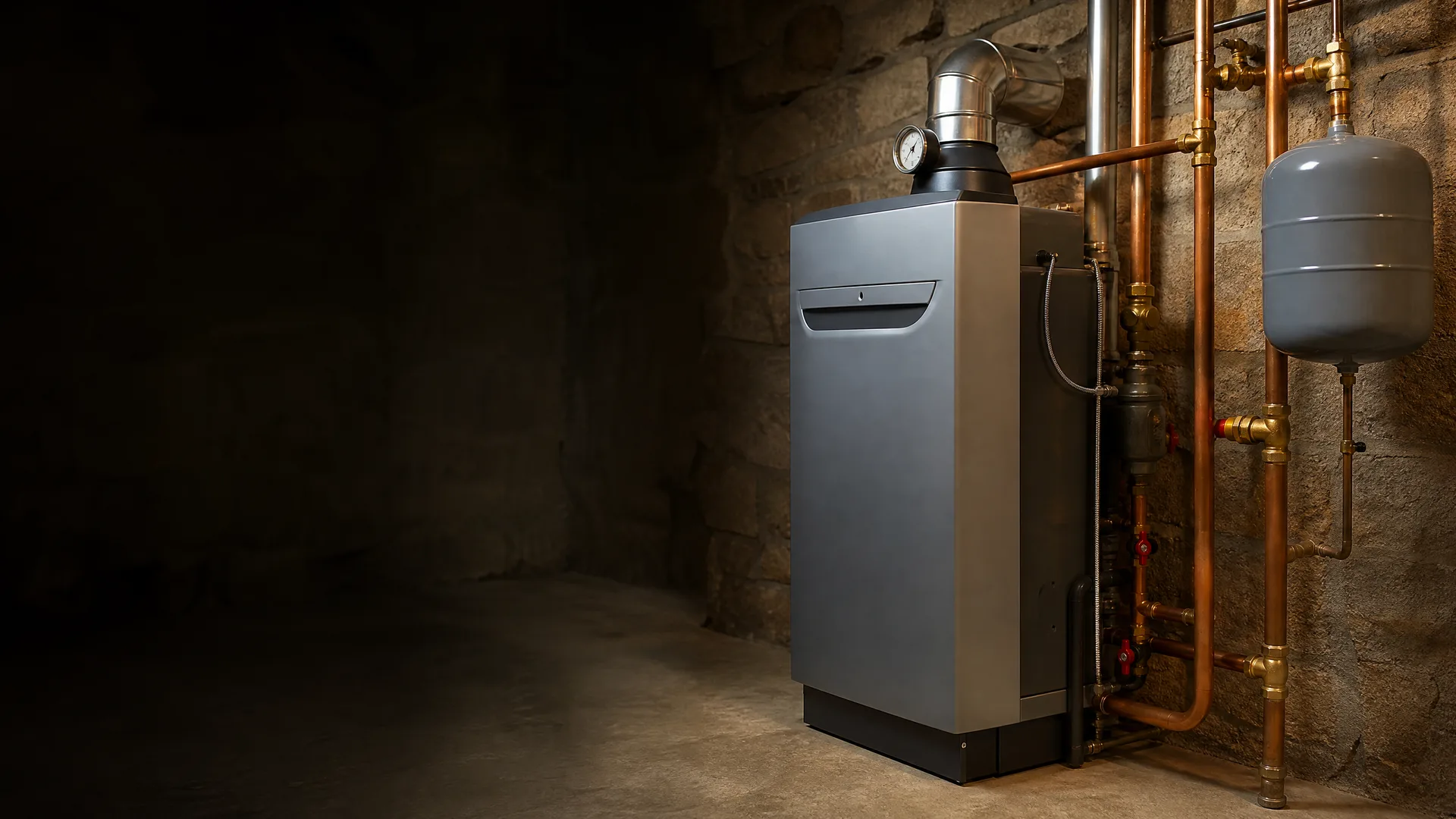
A gray floor-standing boiler with a flue pipe and pressure gauge stands against a stone basement wall, connected to copper and brass piping and a gray expansion tank.

The right pro for this job

Step 1 of 3: Equipment