
Why your boiler is leaking water in Washington

Describe your boiler job, and a local pro who handles it gets in touch.

Request a pro

A boiler leaks when water escapes somewhere it shouldn't, usually from a worn pressure relief valve, a failing pump seal, loose fittings, or a crack in the tank itself. Pressure that builds too high will force the relief valve to release water as a safety measure, and that can look like a slow drip or a steady puddle depending on how bad it's gotten. A pump seal wears out with age and starts weeping water around the pump housing. Fittings loosen over years of heating and cooling as metal expands and contracts. A cracked tank or heat exchanger is the serious version, and it usually means the unit needs replacing rather than repairing. Any of these can lower your system's pressure, cause rust around the leak point, or damage the floor and walls nearby. Since you're someone who catches small problems early, the leak itself is the sign. What's leaking tells you how urgent it is.

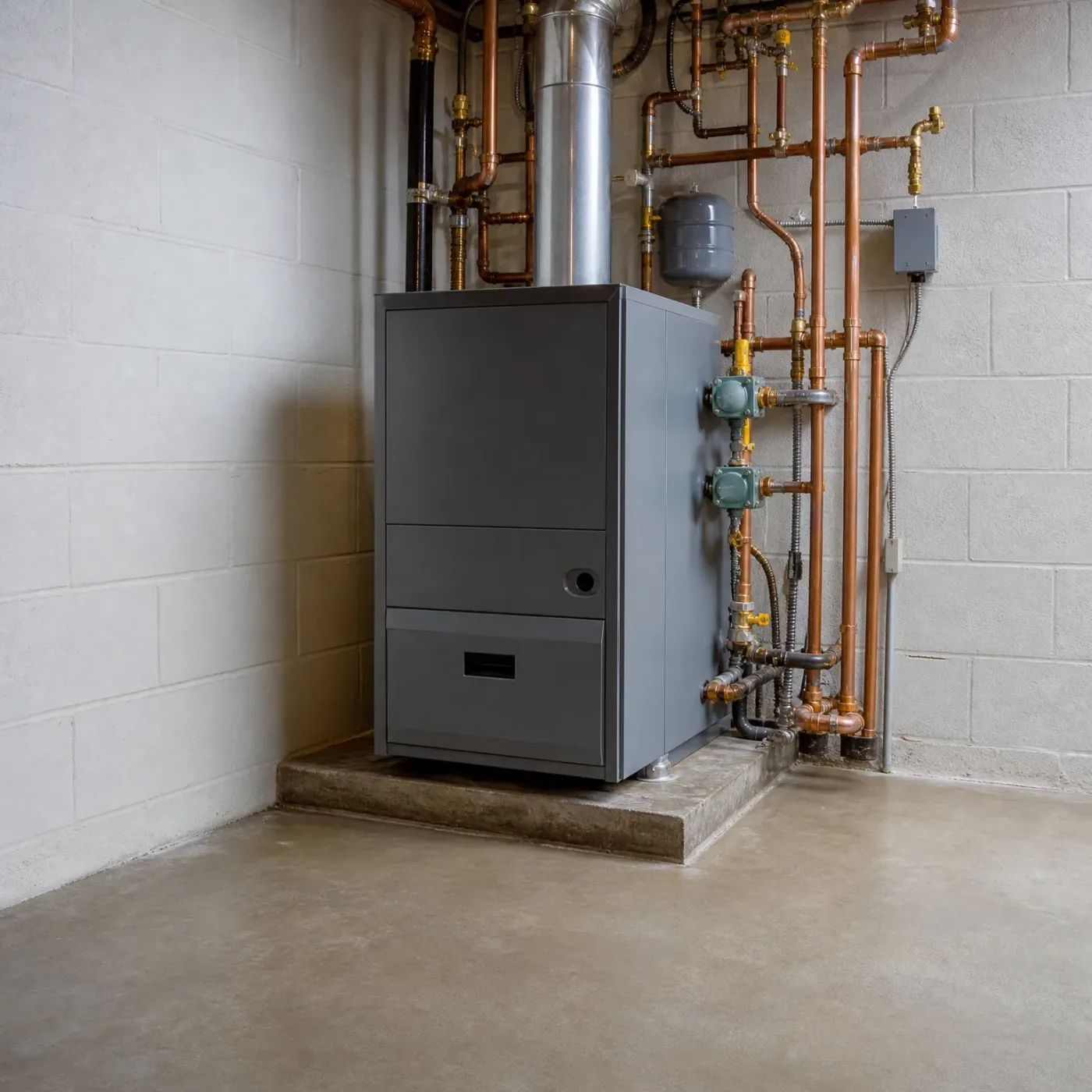
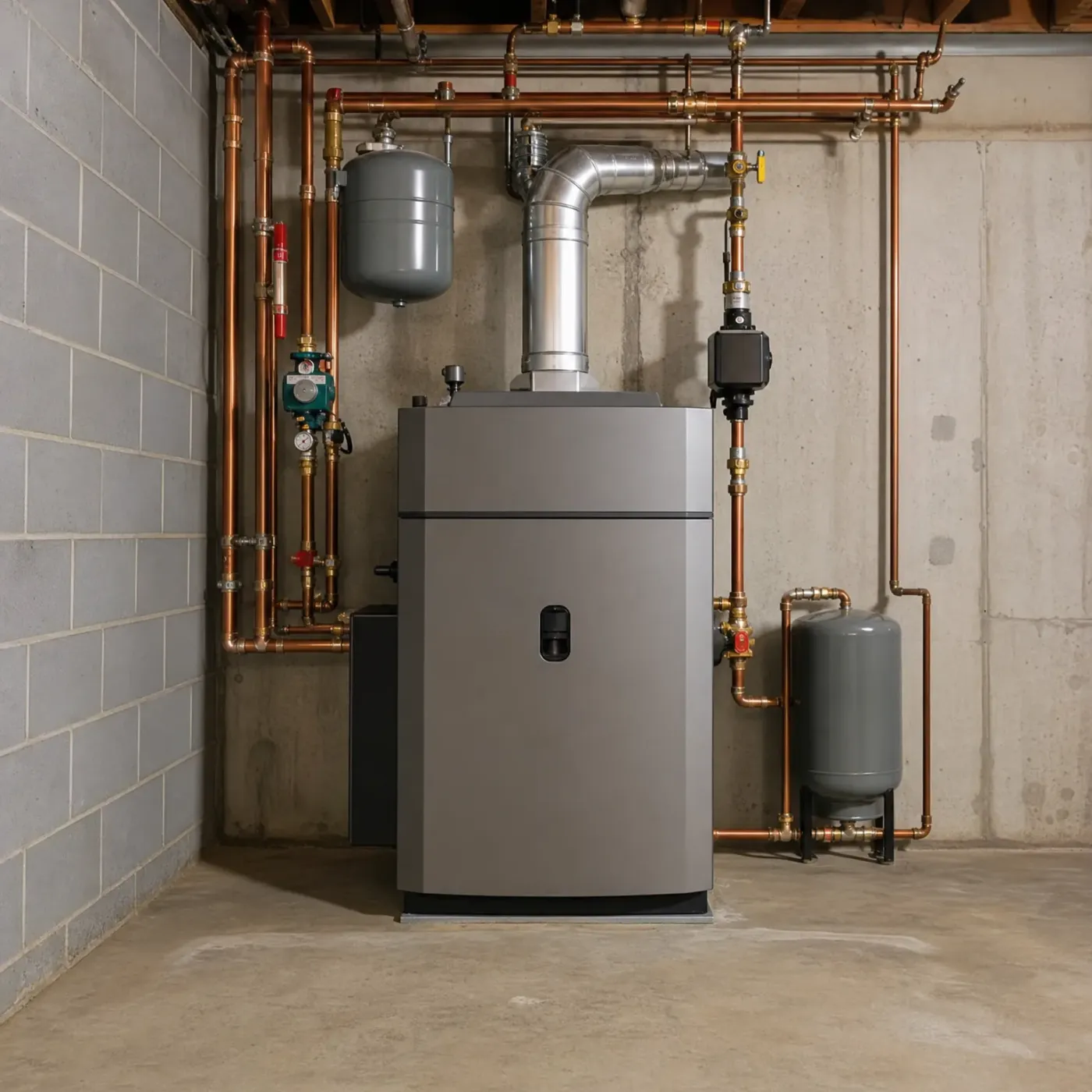
A gray boiler with a metal flue pipe stands in a basement against concrete and concrete-block walls, connected to copper piping, a circulator pump, and two gray expansion tanks.

Running the way it should

A boiler like this holds steady pressure, usually between 12 and 15 psi. The gauges read normal, the fittings stay dry, and the expansion tanks do their job absorbing pressure as the water heats. No puddles on the floor, no rust streaks down the tank.
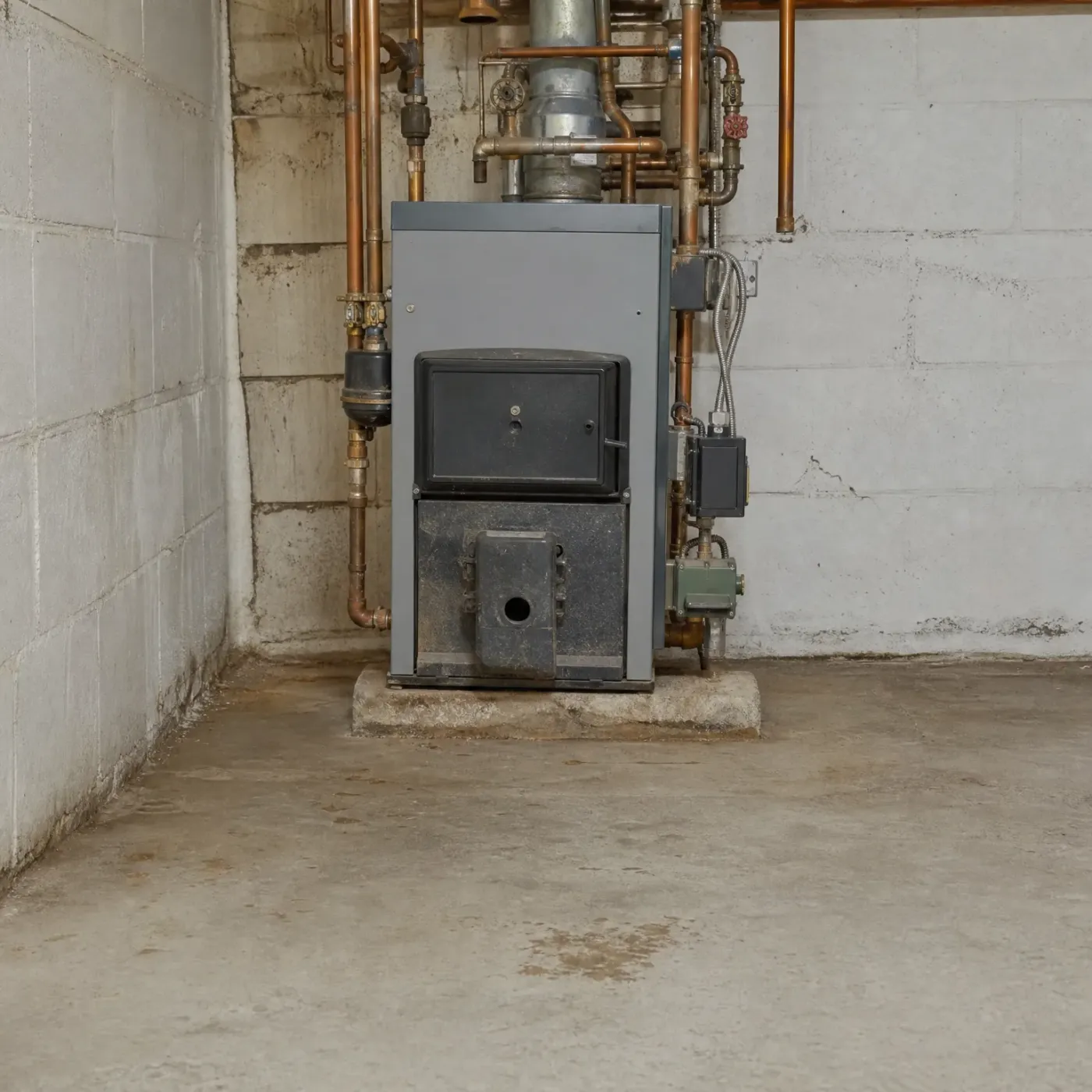
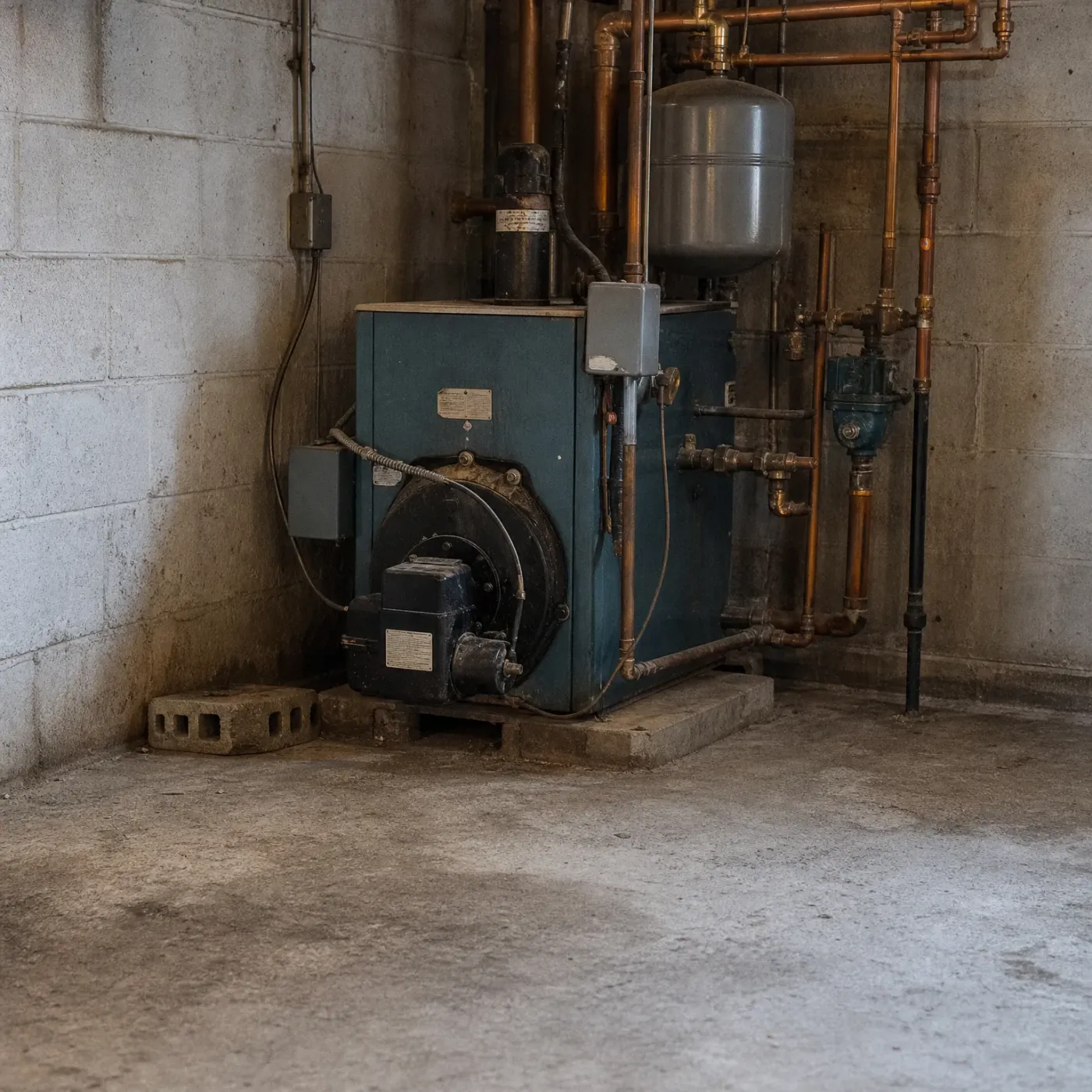
A gray boiler on a concrete pad in a basement with painted concrete block walls, copper piping, a metal flue, and electrical control boxes.

Something's giving way

Water pooling at the base, a stained concrete pad, or corrosion creeping across a fitting means something has already failed or is about to. The control box nearby makes this worse. Water and electrical components close together is a reason to shut the system down until someone looks at it.

What are you seeing around your boiler right now

A damp patch on the floor near the base, a drip from the pressure relief valve, or rust forming where a fitting meets the tank. Sometimes it shows up as a hissing sound when the system is running, or a musty smell in the room that wasn't there before. You might see the pressure gauge creeping above 15 psi before a drip starts, or notice the puddle only after the boiler has been running a while. Left alone, a small leak can corrode the fittings around it and let enough water out to drop the system's pressure, which can keep the boiler from heating your house the way it should.

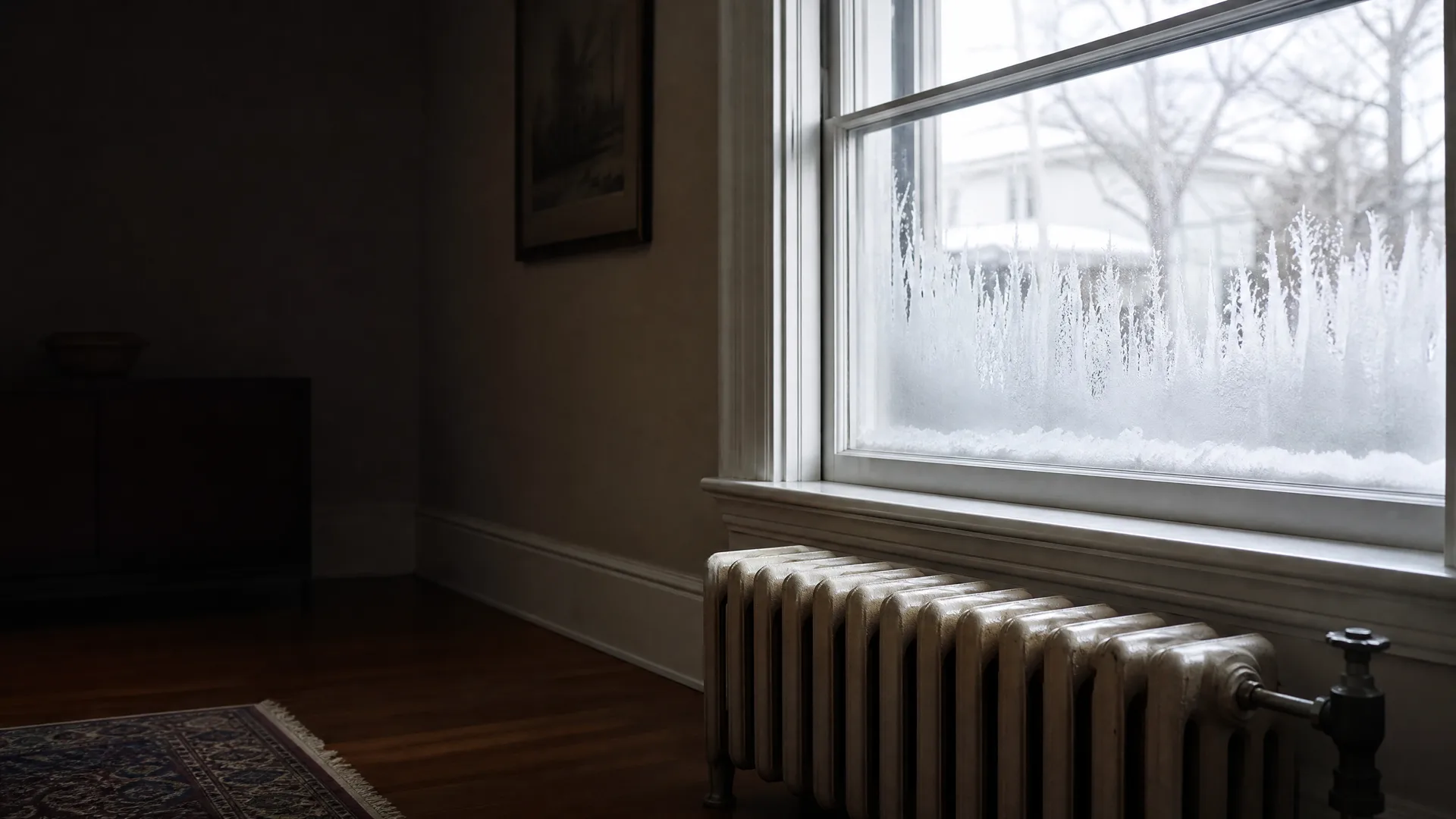
A cast-iron radiator with a valve sits beneath a frost-covered window in a dim room with dark wood floor, a patterned rug, a framed picture, and a low cabinet.

You're up before the rest of the house, and the living room is cold in the way it only gets in January. The cast-iron radiator sits under the window, and the inside of the glass has gone white with ice. You crouch down near the base of the radiator and feel the floor before you see it, a damp ring spreading out from one of the fittings. A thin trail has run down the pipe and pooled against the baseboard. The radiator ticks as it heats, but the water keeps beading at the joint, dripping slow and steady onto wood that's already starting to darken.

A gray boiler unit on a concrete pad in a basement corner, connected to copper piping, valves and a metal flue against painted concrete block walls.
Pipes and fittings stay dry, the expansion tank holds its charge, and the flue draws clean with no rust forming at the joints.
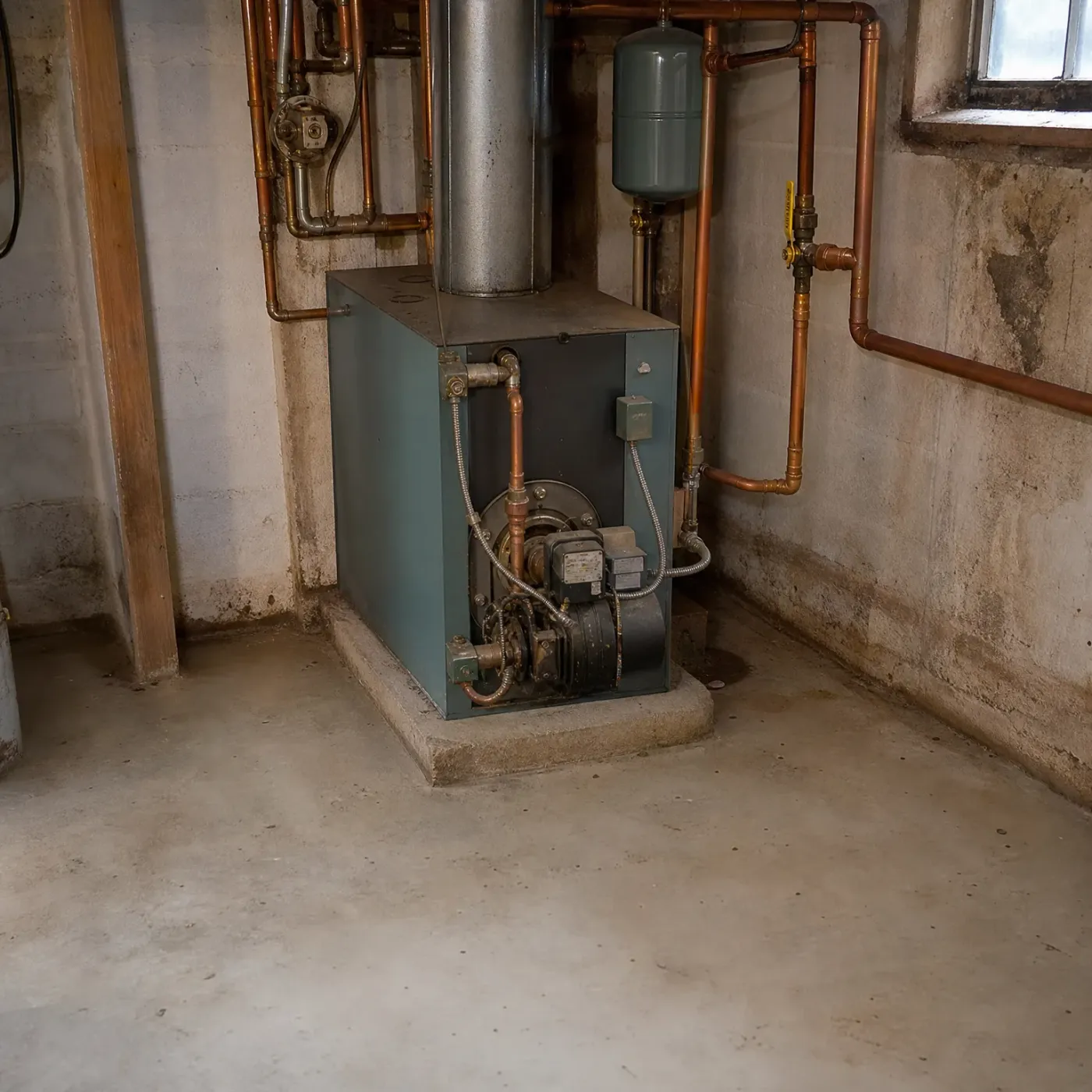
A blue oil-fired boiler with a burner unit sits on a concrete pad in a basement corner, with copper piping, valves and a gray expansion tank overhead against concrete block walls.
Old iron and copper lines corrode at the joints, and a leak here often means the fitting or the tank itself has worn through.

How the leak actually starts

  • Pressure that climbs past 30 psi forces the relief valve open because that is its job, not a sign the valve is bad.
  • A pump seal wears from the inside out, so a damp spot at the pump housing usually means the seal is already gone.
  • Boilers expand water as it heats, and a waterlogged expansion tank sends that extra volume straight to the relief valve.
  • Threaded fittings loosen slightly as the system heats and cools over and over, and that's where slow drips usually start.
  • A hairline crack in a cast iron section often shows up first as rust streaks before any water is visible.
  • Low pressure after a leak will trip a safety switch and shut the boiler down rather than let it run dry.

Most leaks trace back to pressure, not a bad part. A boiler holds water in a closed loop, and that water expands as it heats. The expansion tank is built to absorb that extra volume. When the tank waterlogs, meaning the air charge inside it is gone, it can't take the expansion anymore, and the extra pressure has nowhere to go but out through the relief valve. That valve opening at 30 psi is doing exactly what it's supposed to do. It's not broken. It's telling you something upstream is wrong.

Other leaks start small and mechanical. The circulator pump has a seal that keeps water inside the housing while the motor spins. That seal wears over years, not days, and once it starts failing, water finds its way out along the pump shaft. A damp patch right at the pump is usually that seal, not a loose fitting nearby.

Fittings themselves loosen from the system heating and cooling, over and over, season after season. Metal expands when hot and contracts when it cools, and threaded joints work loose a little at a time. In cast iron boilers, a crack in one section often announces itself with rust streaks along the seam before you ever see standing water.

If pressure drops because of any of this, a safety switch will usually shut the boiler down rather than let it run without enough water.

A woman in a cream cowl-neck sweater sits by a window with snow outside, in a dimly lit living room with a sofa, lit lamp, mirror, candles and a fireplace.
A woman in a gray turtleneck sweater sits beside a large window looking out at snow-covered evergreen trees, in a dimly lit living room with a lit fireplace, lamps, couch and houseplant.
A woman in a cream turtleneck sweater stands beside a large window with snow-covered ground and bare trees outside, in a dimly lit living room with lamps, a sofa and framed art.
A woman in a grey cowl-neck sweater stands indoors near a window, looking out at falling snow, with a lamp, framed picture and couch in the warmly lit room behind her.

A local pro for your boiler repair

Fill out one short form instead of calling around.

You only hire the pro if you want to.

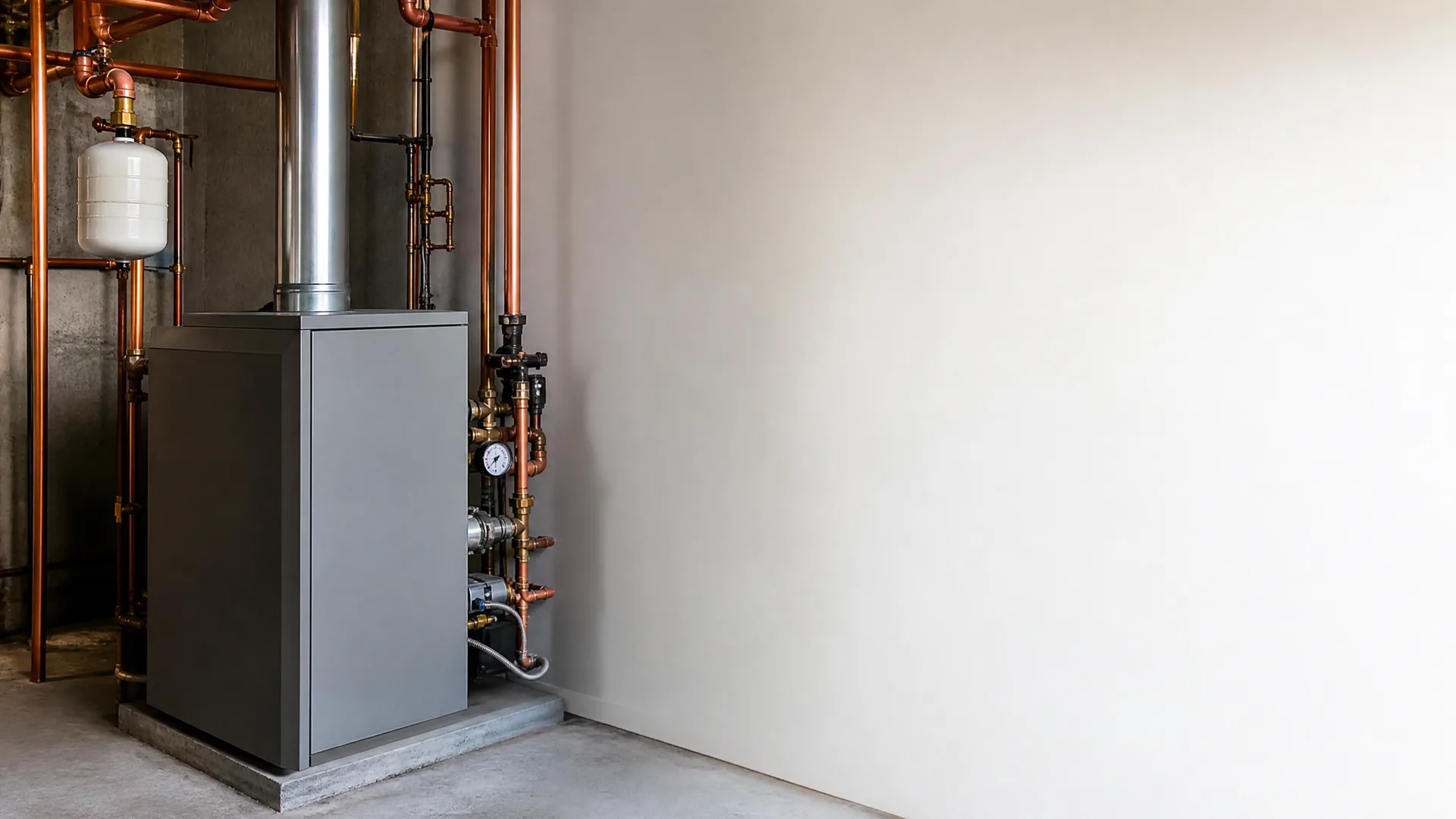
A grey floor-standing boiler with a metal flue and copper pipework, valves and a pressure gauge stands in the corner of a room with plain light walls and a concrete floor.

Why the leak often starts small

A pinhole crack or a loose fitting lets out only a few drops at first, which is why a leak can run for weeks before anyone notices. Water finds the lowest point, so the puddle you see may be a few feet from where it actually started. Following the trail back along the pipe or the base of the tank usually leads to the real source.

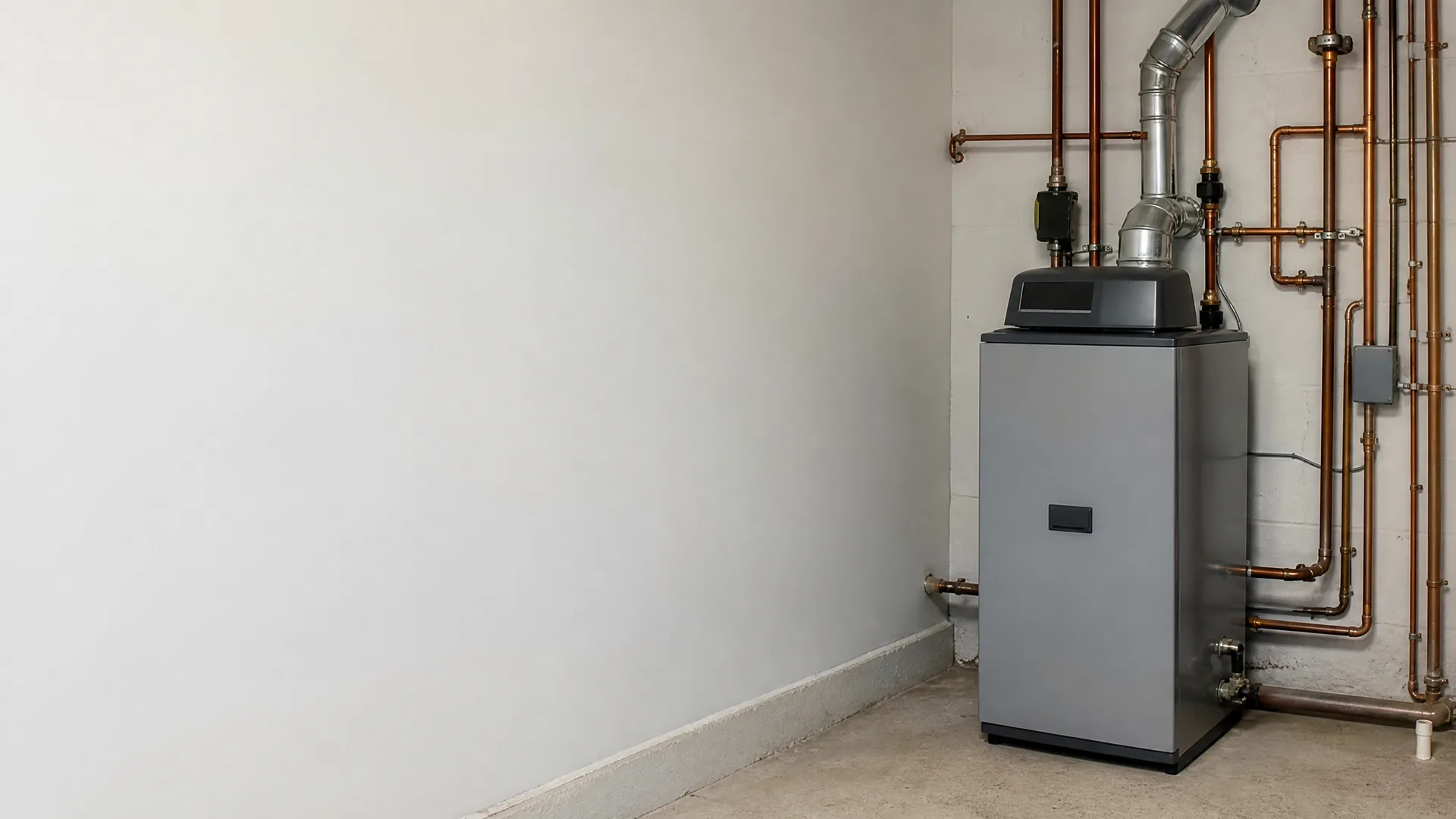
A gray floor-standing boiler with a metal flue pipe stands in the corner of a plain painted basement room, connected to copper pipes running along the wall.

What a slow leak does over time

Water leaking near the burner or the electrical connections can cause bigger problems than the leak itself, including corrosion on wiring and controls that weren't built to get wet. A boiler losing water also loses pressure, and a system that keeps dropping below 12 psi will need water added again and again until the actual source gets fixed.

Repair the Leak or Replace the Boiler

Fix the leak

  • A worn pressure relief valve or a pump seal can be replaced without touching the rest of the system.
  • If the tank and main fittings are sound, a repair stops the leak at a fraction of what a new unit costs.
  • Repairs can usually happen within days, so the radiators stay warm while the part gets replaced.
  • A contractor can pressure test the system afterward to confirm the fix holds before leaving.
  • Small leaks caught early often mean the damage stopped at one part instead of spreading to the tank.

Replace the boiler

  • A crack in the tank itself can't be patched, since the metal has already worn through.
  • If the unit has leaked more than once, repeated repairs may just delay the same failure.
  • A new boiler comes with a fresh expansion tank and seals, so pressure holds the way it should from day one.
  • Replacement makes sense when rust has spread beyond the one fitting or valve that first failed.
  • An older unit that keeps losing pressure may be costing more in water damage than a new one would cost to install.
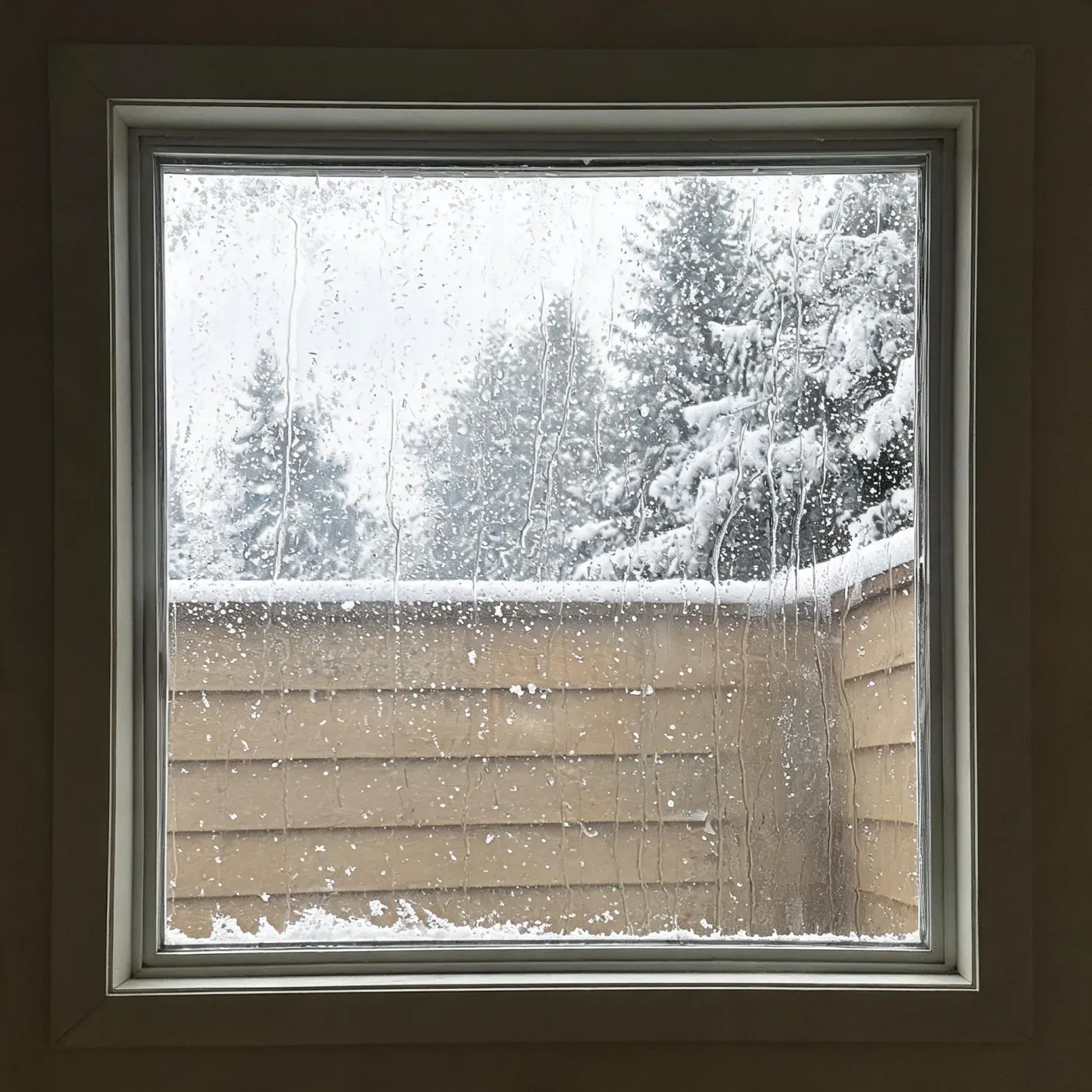
View through a square window with condensation streaks and water droplets, showing snow-covered evergreen trees above a beige horizontal-siding wall topped with snow.

Statewide, winter nights average 30°F, according to the National Weather Service. That's not the deep cold some states see, but it's enough to push your boiler to run longer stretches through the night to keep the house warm. A boiler that's cycling on for hours at a time builds pressure more often, and that's exactly when a worn relief valve or a loose fitting tends to show itself. You might notice the system running more than usual, or a drip near the base that wasn't there in warmer weather. A leak that was barely noticeable in October can turn into a steady puddle once the cold settles in for good.

NOAA nClimDiv 1991-2020 county normals weighted by homes

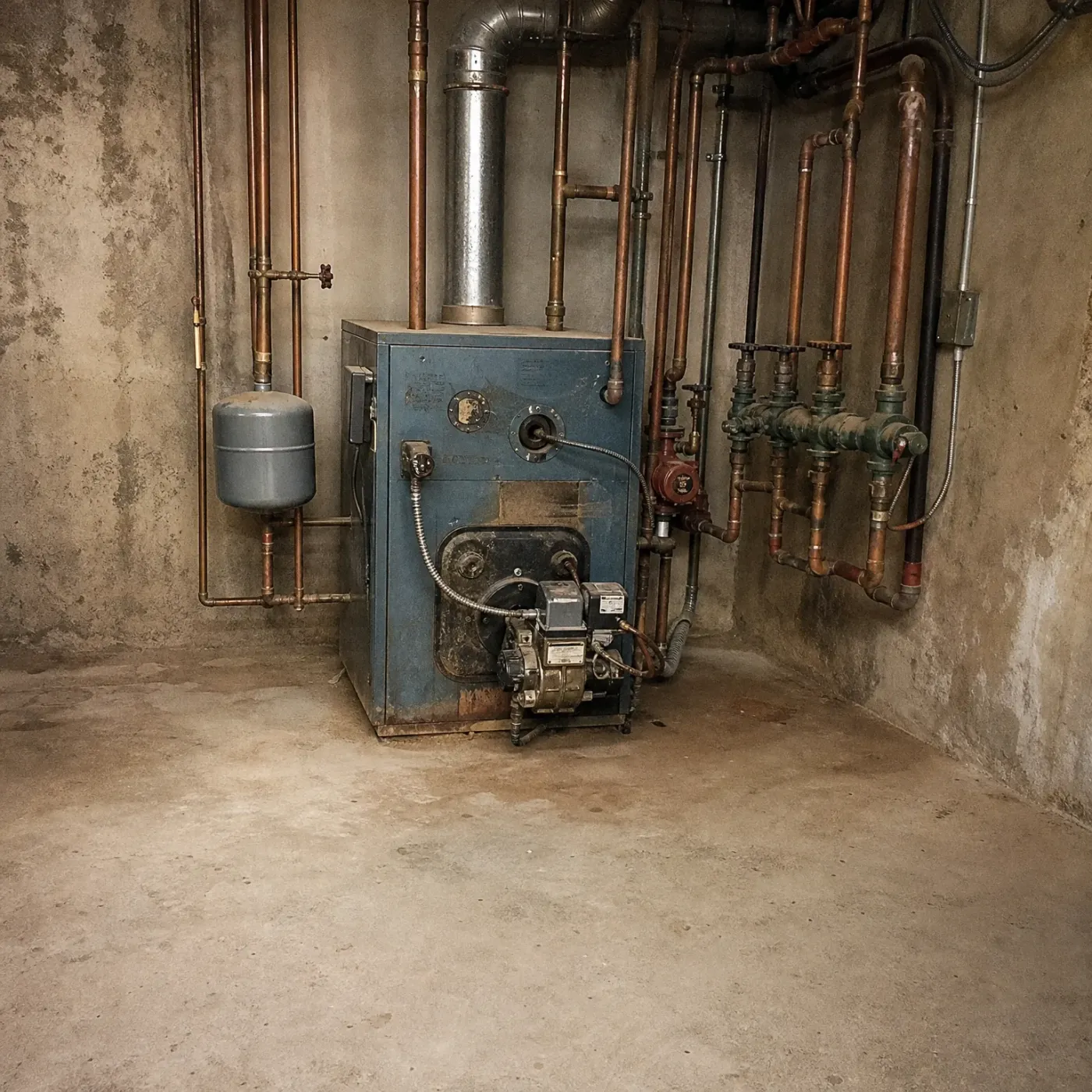
An older blue boiler with a burner unit stands in a concrete basement corner, connected to copper and steel piping, valves and a gray expansion tank on the wall.
Before you get your boiler repair
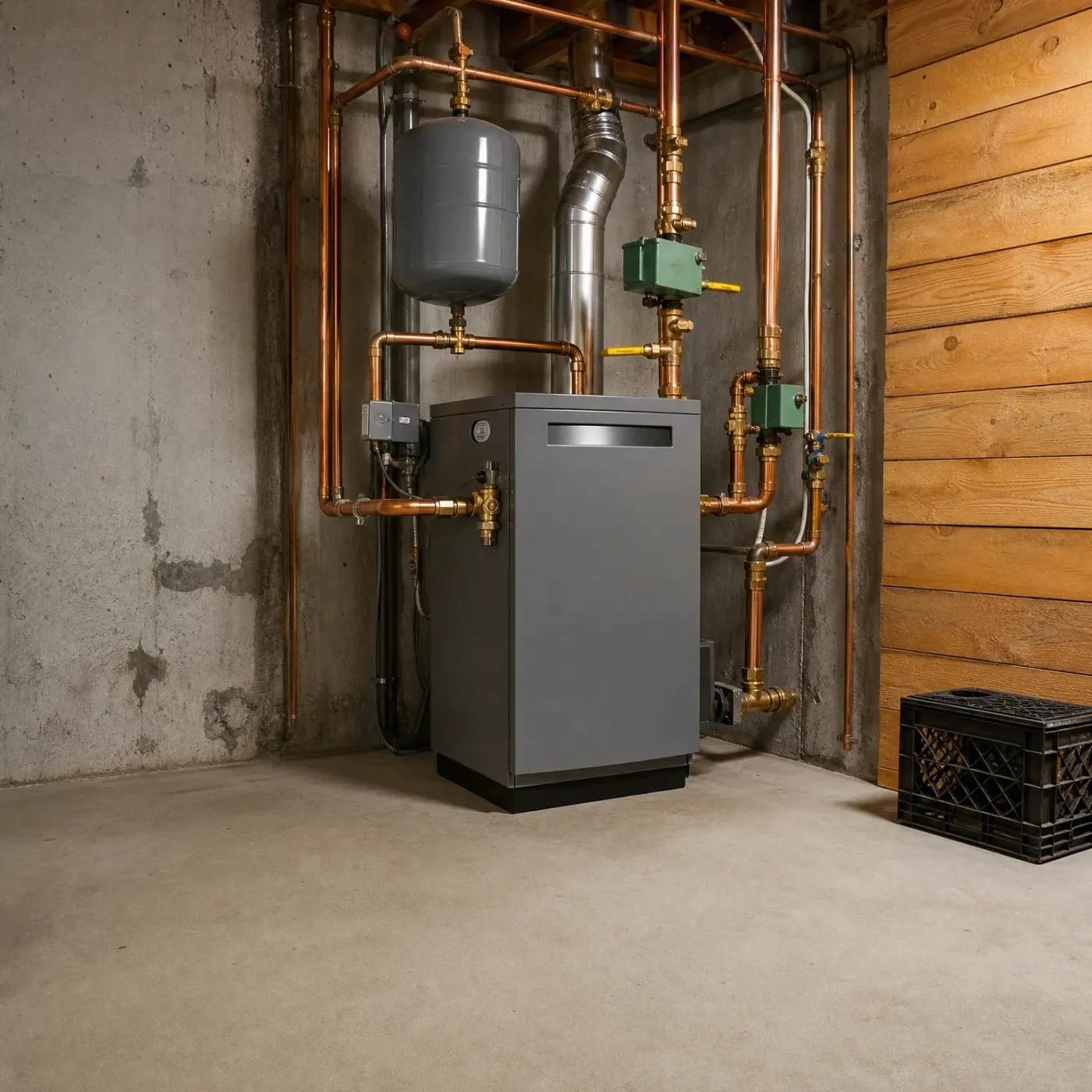
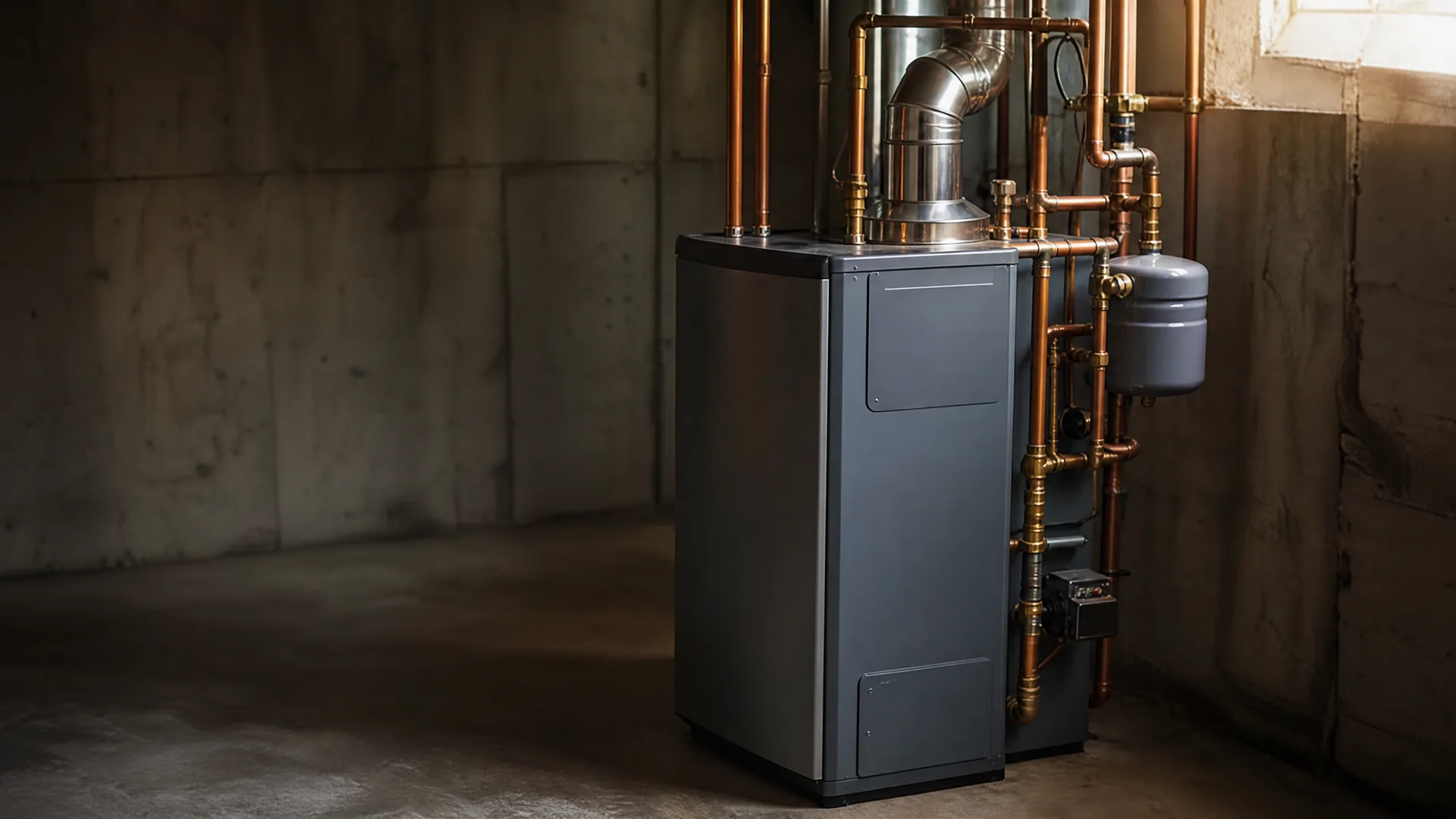
A gray boiler unit in a basement corner with copper piping, brass valves, a gray expansion tank, a metal flue duct, concrete walls and a wood-paneled wall, with a black plastic crate on the floor at right.
After you get your boiler repair
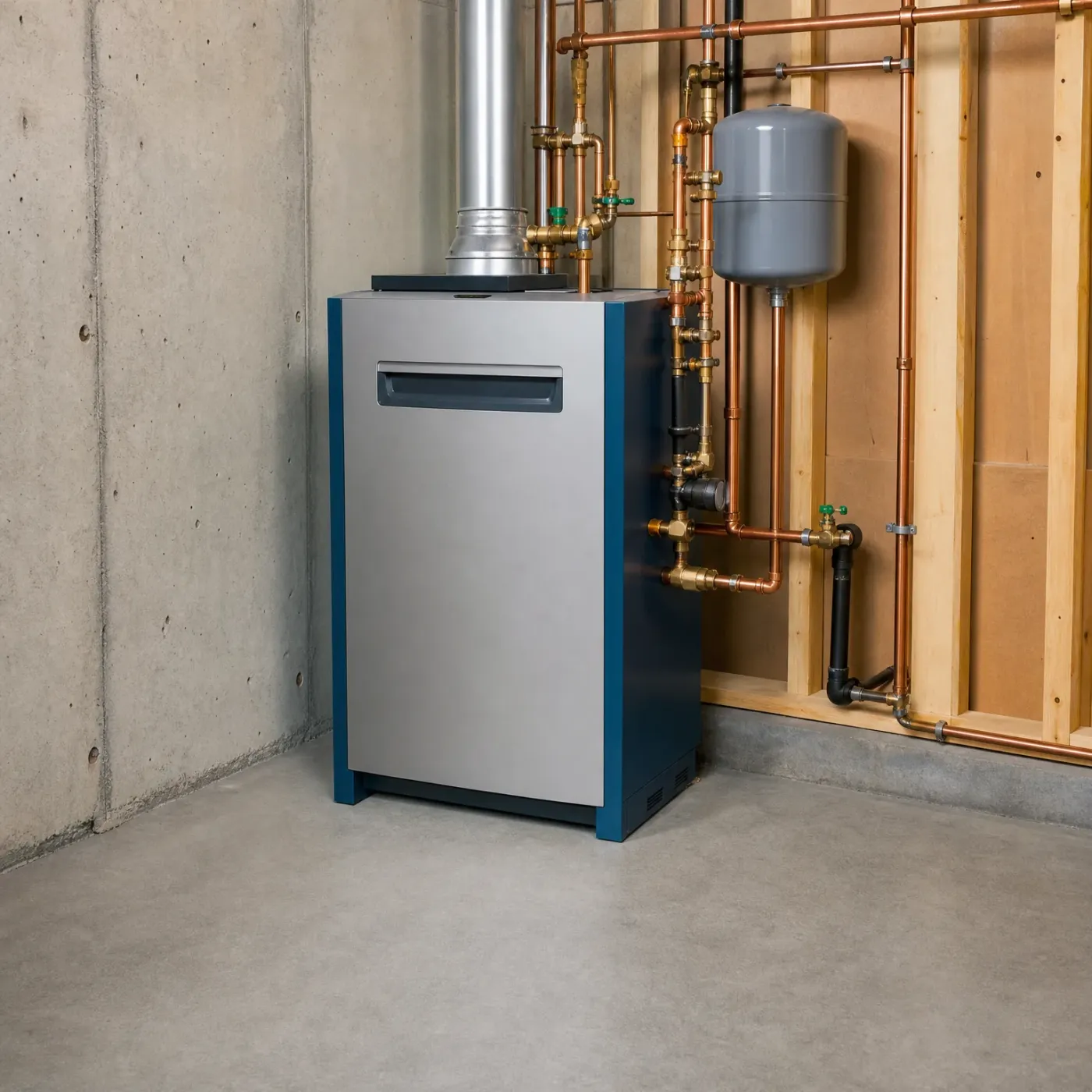
A gray and blue floor-standing boiler in a basement corner, with a metal flue pipe and copper and black piping, valves, and a gray expansion tank mounted on an unfinished wood-framed wall beside a concrete wall.

Running clean

Copper lines and brass fittings stay bright, with no green or white crust at the joints. The expansion tank holds its charge, so pressure stays steady and the relief valve stays shut. Nothing drips onto the concrete pad below.

A green oil-fired boiler with a flue pipe, burner and circulator pumps sits on a concrete pad in a basement corner, surrounded by copper piping and an expansion tank against concrete walls.

Leaking at the joint

Rust streaks down from where a fitting meets the tank, and the flue pipe shows the same staining near its base. A leak here is usually the fitting or the tank wall giving out after years of heating and cooling. Left alone, it only gets worse.

Winter nights average 30°F statewide

At 30°F, your boiler isn't just holding heat, it's cycling on and off most of the night to keep up. Every extra cycle puts more strain on the pump seal and the fittings, and that's often where a slow leak gets its start.

NOAA nClimDiv 1991-2020 county normals weighted by homes

Letting it ride for now

You keep an eye on the damp spot, wipe it up, and figure you'll deal with it once it gets worse. Until then you're checking the base of the boiler every morning, keeping towels nearby, and watching the pressure gauge more than you used to. A loose fitting can sometimes be snugged up on its own, but a worn valve or a failing seal won't fix itself, and the drip usually keeps coming back. Meanwhile you're still the one tracking it, still the one noticing when it's worse than yesterday.

Getting someone out to look

Instead of spending evenings searching for a contractor near you, calling a few, and explaining the same leak over and over, you answer a short set of questions once and get matched with someone who handles boiler repair. They reach out to you directly to set up a time. You're not comparing quotes on your own or chasing anyone down. Someone qualified looks at the valve, the seal, or the fitting and tells you what's actually going on, instead of you guessing from a puddle on the floor.

A bearded man in a blue and brown plaid flannel shirt stands indoors looking out a window at snow-covered trees, with a ceramic mug on the windowsill.
A man in a blue T-shirt sits on a light gray sofa, laughing while looking at an open laptop in the foreground, with a framed picture, lamp and potted plant behind him.
A woman in a cream sweater and jeans stands in the open doorway of a white stucco house, holding the dark door, while a man in a dark quilted jacket seen from behind walks toward the entry past potted plants.

A leak doesn't fix itself

A boiler leaking water somewhere, a relief valve, a pump seal, a fitting, a crack in the tank, and the pressure, the sound, the rust at the joint all telling you the same thing. You already know not to let it ride. That's the instinct that catches a worn valve before it takes the pump seal with it, or a loose fitting before it turns into a cracked tank.

What you don't have is time to spend finding someone who works on boilers, calling around, explaining the damp patch and the hissing sound to three different people, and sorting through quotes that don't tell you much. Once you know what's leaking, the next step is getting matched with a contractor who handles this kind of repair and having them reach out to you directly, so you can describe what you're seeing once and go from there.

Interior corner with a beige sofa holding a dark green and a light cushion and a textured throw, a potted small-leaved tree beside a white-framed window, and a dark shallow bowl on a wooden coffee table in the foreground.
A gray boiler unit in a concrete-walled basement, connected to copper piping, a metal flue duct, and a wall-mounted expansion tank.

Get the right pro for your boiler

Step 1 of 3: Equipment