Tell us about the job
Takes about a minute. No obligation.
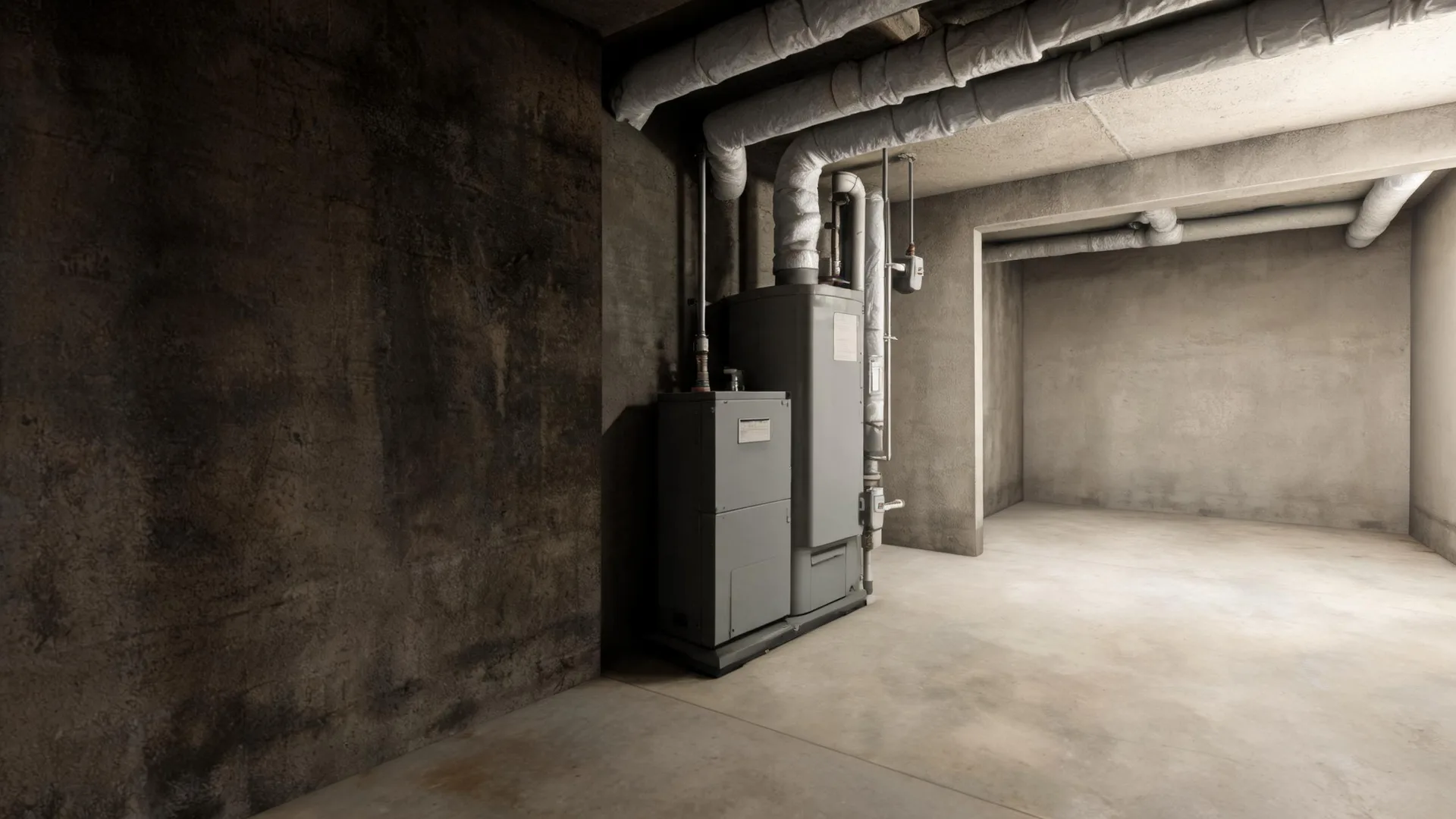
Sizing a boiler for this county starts with understanding what the burner and heat exchanger are actually asked to carry. Homes in Whitman County, WA run heat about nine months a year, from September through May. A contractor quoting a replacement here has to run a proper load calculation before specifying equipment, because a unit that is even modestly undersized will cycle harder and longer, stressing the heat exchanger through repeated thermal expansion across the full run of winter. Poor installation compounds that: a badly set combustion air ratio or an undersized expansion tank does not stay hidden when the system runs this steadily. The burner earns its wear here.
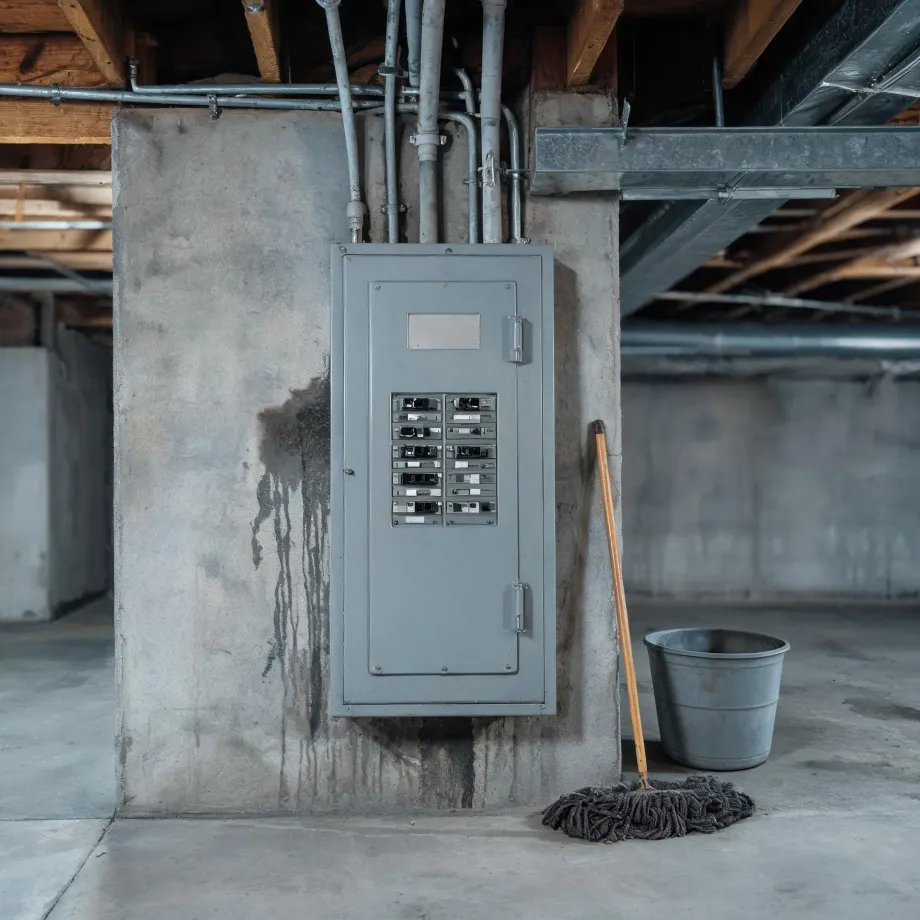
Ductwork laid down for a heating system that has since been replaced once or twice carries assumptions about flow, routing, and load that may not match what a new boiler needs to distribute heat through the house. Half the homes in Whitman County, Washington were built in 1977 or earlier (2020-2024 ACS 5-year). A contractor quoting a boiler installation here has to evaluate what those ducts can actually carry before the unit is even selected, because undersized or misrouted runs will push a correctly sized boiler into short-cycling or uneven heat distribution regardless of what the equipment itself is rated for. The electrical side matters too, though boilers draw differently than forced-air systems, and an older service panel still has to be confirmed against what the new unit and its controls will pull.
What Goes Into a Boiler Installation
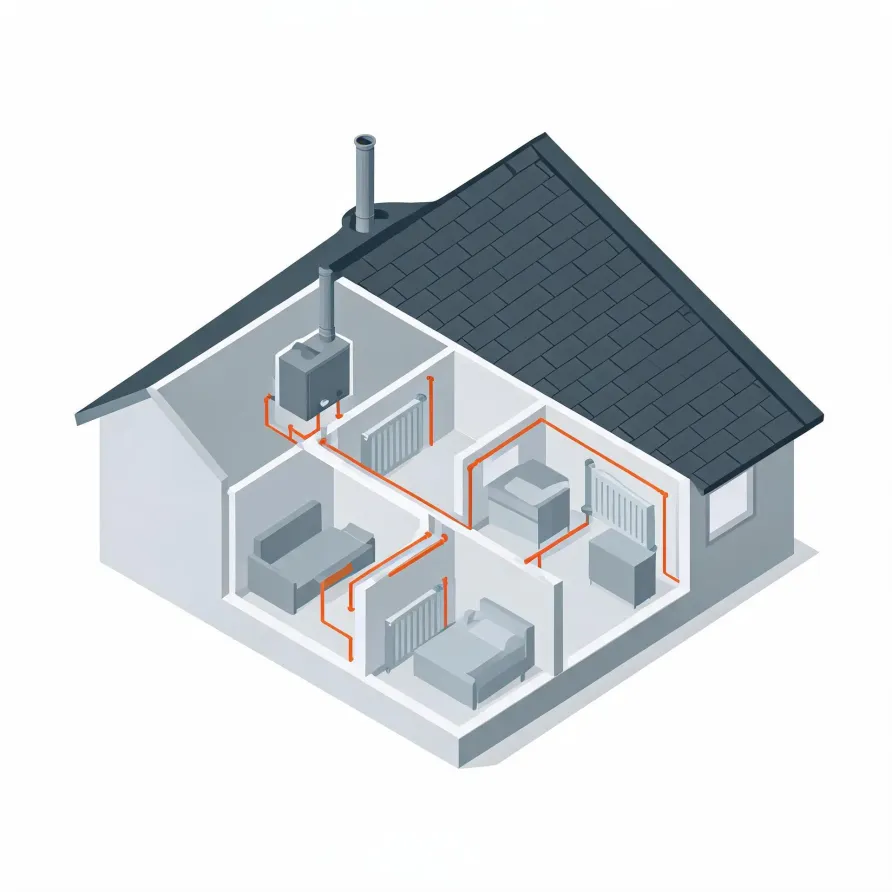
The boiler itself sits in a mechanical room, basement, or utility closet and is the unit that heats water and sends it out through the system. Alongside it, the expansion tank and pressure relief valve mount close to the boiler, giving the system room to handle pressure changes safely.
From the boiler, supply and return pipes run through the house to the heat emitters, which are the radiators, baseboard units, or radiant floor loops that deliver warmth to each room. A circulator pump, mounted on the piping near the boiler, moves the heated water through that loop and back.
The drawing shows a typical layout, and a licensed contractor determines exactly which components apply to your home and how they connect.
Find a contractor in Whitman CountyWhitman County, by the numbers
90 severe weather events were recorded in Whitman County, Washington between 2015 and 2024.
NOAA National Centers for Environmental Information, Storm Events Database, bulk CSV export, events 2015-01-01 through 2024-12-31.Half the homes in Whitman County, Washington were built in 1977 or earlier (2020-2024 ACS 5-year).
U.S. Census Bureau, 2020-2024 American Community Survey 5-Year EstimatesWhitman County, Washington holds 22,091 housing units (2020-2024 ACS 5-year).
U.S. Census Bureau, 2020-2024 American Community Survey 5-Year EstimatesOwners occupy 46.8% of the occupied homes in Whitman County, Washington (2020-2024 ACS 5-year).
U.S. Census Bureau, 2020-2024 American Community Survey 5-Year EstimatesBoiler Installation Rules for Whitman County, Washington1 sourced standards and codes
Licensing and Legal Requirements in Whitman County, Washington
Washington requires contractor registration rather than an HVAC licence: every contractor must register with the Department of Labor and Industries, and advertising, bidding or working as a contractor without that registration is a gross misdemeanour.
Severe Weather Events in Whitman County
The stress a boiler carries is shaped by what the weather outside demands of it. How often conditions push a heating system hard is a local fact, and it bears directly on what equipment is right for a home in Whitman County.
90 severe weather events, 2015–2024. Source: NOAA National Centers for Environmental Information, Storm Events Database.